

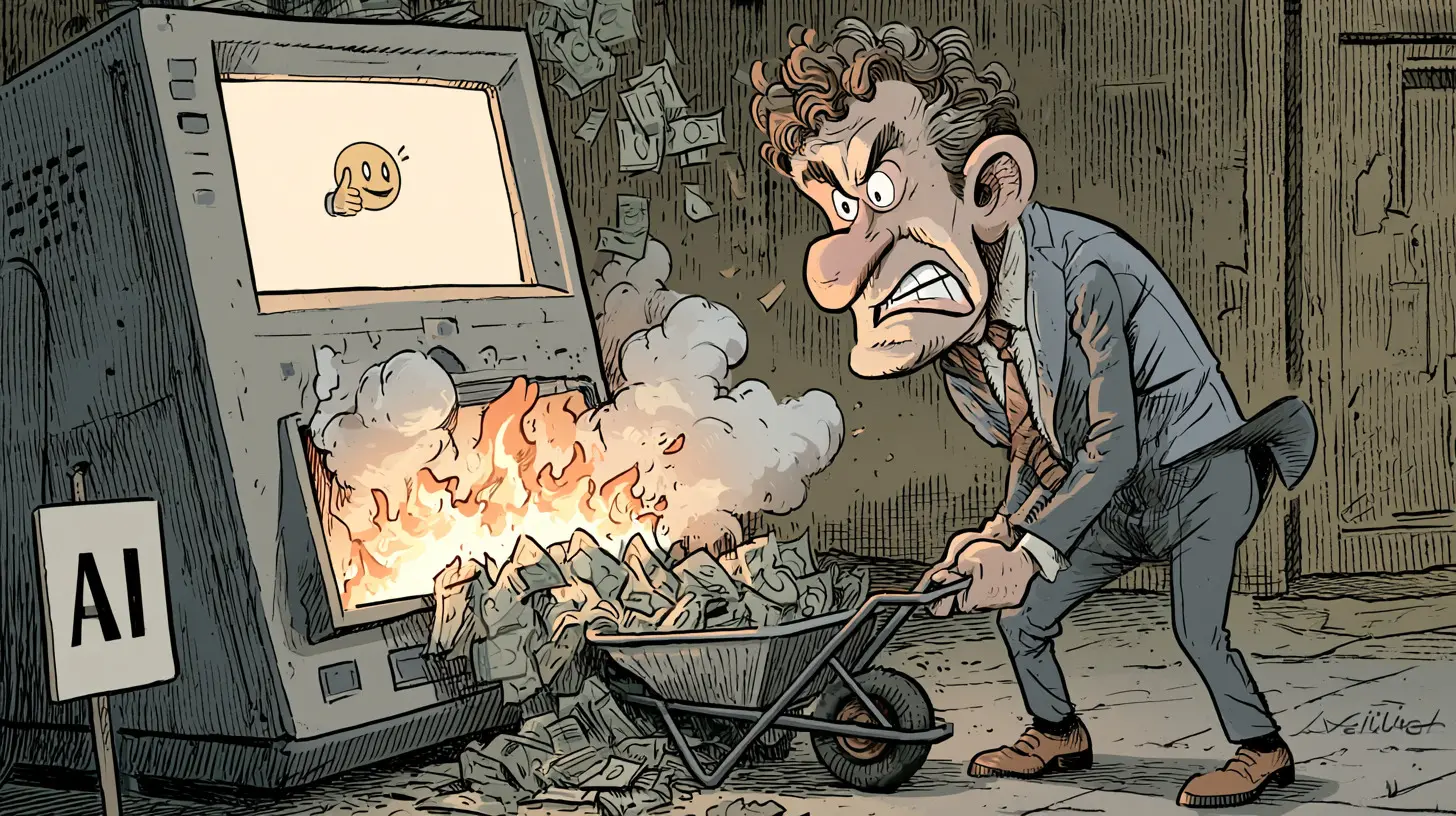
A stunning example of AI cost mismanagement has emerged, with a company reportedly burning through roughly $500 million in Claude AI credits within a single month. The cause? A simple oversight: the organization forgot to set any usage limits for its employees. This incident, first reported by Axios (paywalled), is a stark reminder that the promised cost-saving benefits of artificial intelligence can quickly backfire when guardrails are absent.
The company, which has not been named publicly, failed to implement any caps or monitoring on how its workforce used Anthropic's Claude AI platform. As a result, employees apparently treated the AI credits as an unlimited resource, consuming them at a rate that led to an astronomical bill. While the exact number of users or the nature of the tasks remains unclear, the sheer scale of the expenditure illustrates how quickly AI costs can spiral out of control without proper governance.
The broader context of AI cost challenges
This incident is not isolated. It comes amid a growing wave of corporate dissatisfaction with the return on investment from AI tools. Recent comments from Uber's new COO, Andrew Macdonald, highlighted that AI-related costs and token usage have not meaningfully improved worker productivity as expected. Reports also indicate that Uber engineers have already exhausted their AI budget for 2026, meaning they may be forced to ration their AI usage for the remainder of the year.
Other major corporations are echoing these sentiments. Costco, Delta Airlines, and IBM have all expressed concerns about the value of AI, emphasizing a preference for retaining human workers instead of expanding automation. This marks a shift from the earlier hype, where AI was widely seen as a magic solution to cut costs and boost efficiency.
The term 'tokenmaxxing' has even entered the corporate lexicon, describing the tendency of employees to burn through AI credits as quickly as possible. This behavior, often driven by a 'use it or lose it' mentality, leads to overconsumption of AI services without corresponding business benefits. The $500 million case is an extreme example of tokenmaxxing gone wild.
Why usage limits matter
AI platforms like Claude and OpenAI's ChatGPT typically charge based on the number of tokens processed (roughly, the amount of text generated or analyzed). Without per-user or per-project limits, employees can easily run up massive bills by generating long documents, running extensive analyses, or simply experimenting repeatedly with different prompts. In the context of a large enterprise with hundreds or thousands of employees, even moderate overuse can quickly multiply into millions of dollars.
This oversight is remarkably common. Many organizations rushed to adopt AI tools during the recent boom, often bypassing the financial controls they would normally apply to software subscriptions or cloud services. The promise of AI as a low-cost assistant led many to overlook the need for budgeting. But as the $500 million case shows, the consequences can be disastrous.
The industry response: moving away from tokenmaxxing
Providers themselves are beginning to tighten usage policies. Both Google and Anthropic have shifted toward usage-based billing and introduced stricter limits for non-enterprise users, causing dissatisfaction among small businesses and individual developers. Meanwhile, even companies that have deeply integrated AI into their strategies are pulling back.
Microsoft, which initially encouraged employees across various roles to 'vibe-code' and experiment with AI tools, has reportedly started canceling Claude subscriptions and discouraging overuse of AI. Just six months ago, Microsoft was pushing workers to adopt these tools; now it is enforcing limits. This reversal underscores the realization that uncontrolled AI usage can become a financial drain rather than a boon.
Long-term cost projections: a mixed picture
Despite these short-term pain points, the trajectory of AI costs is a subject of debate. A recent Gartner report suggests that inference costs for generative AI models will drop to just one-tenth of 2025 levels by 2030. This would make AI much more affordable in the long run. However, the same report warns that token usage is expected to grow anywhere from 5 to 30 times current levels, driven by increasing reliance on AI agents and more complex processes. The net result could be that overall AI spending still rises, even as unit costs fall.
This presents a dilemma for corporate leaders: invest now to gain a competitive edge, but risk overspending on current inefficient models, or wait for costs to drop, but fall behind early adopters. The $500 million fiasco adds another layer of caution: without proper internal controls, any investment, no matter how sensible, can turn into a catastrophe.
Historical parallels are instructive. In the early days of cloud computing, many firms left cloud resources unmonitored, leading to massive bills for idle servers or forgotten storage buckets. Over time, tools and policies evolved to curb such waste. AI may follow a similar path, but until the ecosystem matures, companies must enforce rigorous budgeting, set usage caps, and educate employees on responsible consumption.
AI's promise remains alluring, but the dream of cost savings is beginning to crack under the weight of real-world usage. The $500 million incident is likely not an anomaly; if anything, it may be the first of many cautionary tales that will shape how enterprises approach AI adoption in the years ahead.
Source: Android Authority News