

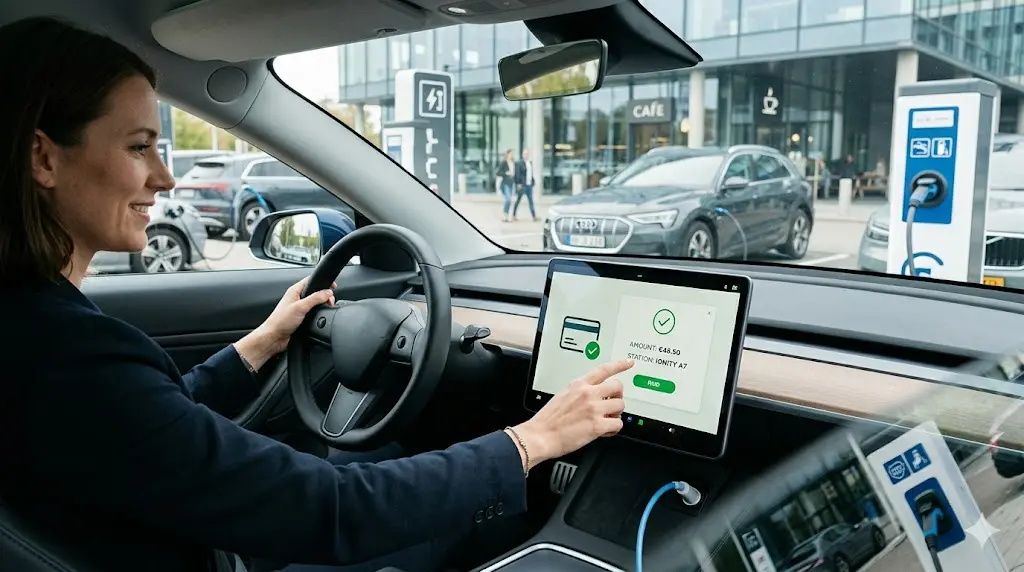
Global research on digital payments in the automotive industry shows that consumers increasingly expect seamless, secure, and fast payment experiences throughout the entire vehicle ownership journey. From online car purchases to contactless charging payments and in-car subscriptions, digital payment systems are changing how automotive businesses operate worldwide.
Digital payments are transforming the automotive industry by simplifying vehicle purchases, enabling connected car services, improving customer convenience, and supporting subscription-based mobility models. In 2026, automotive companies increasingly rely on integrated digital payment systems to improve customer experiences and operational efficiency.
Cars are becoming financial platforms in ways many people didn’t expect.
And honestly, that shift is happening much faster than most traditional dealerships anticipated.
What Is Global Research on Digital Payments in the Automotive Industry?
Digital Payments in the Automotive Industry: Electronic payment systems used for vehicle purchases, maintenance services, charging infrastructure, subscriptions, insurance, parking, tolls, and connected mobility services.
For years, automotive payments mostly meant financing paperwork at dealerships.
That’s changed dramatically.
Now drivers use digital payment systems for:
Online vehicle reservations
Mobile financing approvals
Contactless fuel payments
EV charging transactions
In-car subscriptions
Parking automation
Insurance services
Connected mobility apps
Here’s the thing many consumers don’t fully realize yet: modern vehicles increasingly function as connected digital ecosystems instead of standalone transportation products.
Payments are becoming integrated directly into those ecosystems.
Research from organizations like Deloitte and PwC continues showing strong growth in automotive fintech and connected payment systems worldwide.
Why Digital Payments Matter in the Automotive Industry in 2026
2026 feels like a turning point because automotive companies are no longer competing only on vehicle performance.
Customer experience matters just as much now.
Consumers expect the same convenience from automotive transactions that they already experience in ecommerce, banking, and mobile apps.
That changes everything.
A Realistic Example
Imagine buying an electric vehicle entirely online.
A customer compares models digitally, secures financing through a mobile platform, signs documents electronically, schedules delivery through an app, and later pays automatically for charging, parking, and software upgrades through integrated payment systems.
Ten years ago, that process sounded futuristic.
Now it’s becoming pretty normal in some markets.
Expert Tip
Automotive brands improving digital payment experiences usually focus on reducing transaction friction. Customers remember convenience surprisingly strongly during large financial purchases like vehicles.
That emotional ease matters more than many companies expected.
Why Consumers Prefer Digital Automotive Payments
People increasingly dislike slow transaction processes.
Especially when buying expensive products.
Digital payments simplify automotive experiences by reducing paperwork, wait times, and repetitive verification systems.
Consumers now expect:
Mobile payment options
Instant financing approvals
Contactless transactions
Subscription flexibility
Automated billing systems
Secure digital wallets
In my experience, convenience has become almost inseparable from customer trust.
If payment systems feel outdated, customers often assume the entire business feels outdated too.
That perception spreads quickly.
How Digital Payments Are Changing the Automotive Industry — Step by Step
The transformation happening right now affects multiple parts of the automotive ecosystem.
1. Online Vehicle Purchases Expand
More customers now complete major portions of vehicle purchases online.
Digital payment systems support:
Deposits
Financing applications
Identity verification
Electronic contracts
Trade-in evaluations
This reduces dealership dependency while giving consumers more control over buying experiences.
Honestly, many buyers prefer avoiding lengthy dealership negotiations altogether.
2. Electric Vehicle Charging Uses Integrated Payments
Electric vehicles accelerated digital payment adoption significantly.
Drivers increasingly use apps, digital wallets, and automated payment systems for charging stations.
Some systems even allow vehicles to authenticate and process payments automatically.
That level of automation would’ve sounded excessive a few years ago.
Now it feels practical.
3. Connected Cars Introduce Subscription Payments
Automotive companies increasingly offer subscription-based features.
This includes:
Navigation upgrades
Driver assistance tools
Entertainment systems
Performance enhancements
Connectivity services
Cars are starting to resemble software platforms in some ways.
And yeah, not everyone likes that trend.
4. Fleet and Mobility Services Depend on Digital Transactions
Ride-sharing, car-sharing, and mobility platforms rely heavily on automated payment systems.
Without seamless digital payments, these business models simply wouldn’t scale effectively.
Automation handles:
Usage tracking
Billing
Dynamic pricing
Insurance adjustments
Customer verification
That operational efficiency supports modern mobility ecosystems.
5. Aftermarket Services Become More Digital
Service centers, maintenance providers, and automotive retailers increasingly use mobile payments, digital financing, and subscription maintenance plans.
Customers expect faster transactions almost everywhere now.
Especially younger drivers.
The Counterintuitive Shift Happening in Automotive Commerce
Digital payments are making automotive ownership feel less permanent.
That’s a surprisingly important shift.
Consumers increasingly treat transportation as an ongoing service rather than a one-time product purchase.
Subscriptions, leasing models, mobility memberships, and pay-per-use systems all support this trend.
In my opinion, this might reshape automotive branding more than vehicle technology itself over the next decade.
Ownership psychology is changing.
That’s a much bigger transformation than many analysts admit.
Why Security Concerns Still Matter
Despite rapid adoption, security remains one of the biggest concerns in automotive payment systems.
Connected vehicles collect enormous amounts of user data.
That includes:
Payment details
Location tracking
Driving behavior
Usage patterns
Personal preferences
Consumers increasingly worry about privacy and cybersecurity risks.
And honestly, those concerns are reasonable.
A connected vehicle with weak security protections could create serious financial and privacy problems.
That’s why automotive companies now invest heavily in encryption, authentication systems, and cybersecurity infrastructure.
Expert Tip
Automotive brands building trust around digital payments usually communicate security protections clearly instead of assuming customers automatically understand them.
Transparency matters a lot here.
How AI Is Supporting Automotive Payment Systems
Artificial intelligence increasingly powers automotive fintech behind the scenes.
AI now helps with:
Fraud detection
Credit analysis
Personalized financing offers
Predictive maintenance billing
Usage-based insurance pricing
Customer support automation
These systems improve efficiency while reducing financial risk.
But there’s also growing debate about algorithmic fairness and financial transparency.
Some customers worry automated financing systems might make unfair decisions without clear explanations.
That conversation is becoming more important globally.
The Emotional Side of Automotive Payments
Most industry reports focus on efficiency.
But buying and owning vehicles remains emotional for many people.
Cars often represent freedom, status, convenience, or personal identity.
Complicated payment systems create stress during already emotional decisions.
Smooth digital experiences reduce anxiety.
That psychological effect probably explains why consumers respond positively to simplified automotive payment systems even when they don’t fully understand the technology behind them.
People remember ease.
Common Mistake Automotive Companies Make
Assuming Technology Alone Creates Better Experiences
This is where many automotive brands struggle.
Adding digital payment tools without improving customer communication often creates confusion instead of convenience.
Customers still need:
Clear pricing
Human support
Transparent billing
Flexible options
Simple interfaces
What actually works is combining digital convenience with understandable customer experiences.
Complex systems frustrate people quickly, especially during expensive transactions.
How Global Markets Differ in Digital Automotive Payments
Adoption rates vary significantly worldwide.
Some regions prioritize mobile-first payment systems while others still rely heavily on traditional financing models.
Urban markets generally adopt digital automotive payments faster because:
Smartphone usage is higher
EV adoption grows faster
Mobility services expand more rapidly
Digital banking systems are stronger
Rural adoption sometimes moves more slowly depending on infrastructure and consumer trust levels.
That uneven growth creates interesting challenges for global automotive companies.
Expert Tip
Automotive businesses entering international markets should adapt payment systems to regional consumer habits instead of assuming one payment experience works everywhere.
Local expectations matter more than many brands realize.
People Most Asked About Global Research on Digital Payments in the Automotive Industry
How are digital payments changing the automotive industry?
Digital payments simplify vehicle purchases, charging systems, subscriptions, maintenance services, and connected car experiences through automated and mobile-friendly transactions.
Why are automotive companies adopting digital payments faster?
Consumers increasingly expect convenience, faster processing, contactless transactions, and integrated digital experiences similar to ecommerce and banking platforms.
Do connected cars use payment systems directly?
Yes. Some connected vehicles now support automated payments for charging, parking, tolls, subscriptions, and other mobility services.
Are automotive subscriptions becoming more common?
Yes. Many companies now offer subscription-based software upgrades, entertainment systems, navigation services, and mobility memberships.
What security concerns exist with automotive digital payments?
Privacy risks, cybersecurity threats, payment fraud, and data protection remain major concerns for connected automotive ecosystems.
How does AI support automotive payments?
AI helps with fraud detection, financing approvals, predictive billing, customer support automation, and personalized financial recommendations.
Will dealerships disappear because of digital payments?
Probably not entirely. Many customers still value physical vehicle experiences and human guidance, although online purchasing continues growing rapidly.
Global research on digital payments in the automotive industry shows that connected financial systems are becoming central to modern mobility experiences. Automotive companies increasingly compete on convenience, digital integration, and seamless customer journeys rather than vehicle hardware alone.
That shift is changing how consumers buy, use, finance, and interact with vehicles worldwide.
And honestly, we’re probably still in the early stages of this transformation.
Businesses and agencies looking to improve online visibility can strengthen SEO ranking and brand visibility through trusted global newswire services and strategic link building services. These solutions help drive organic traffic, media coverage, instant publishing opportunities, and high authority backlinks for long-term digital growth.