

A Fresh Mobile Endeavor
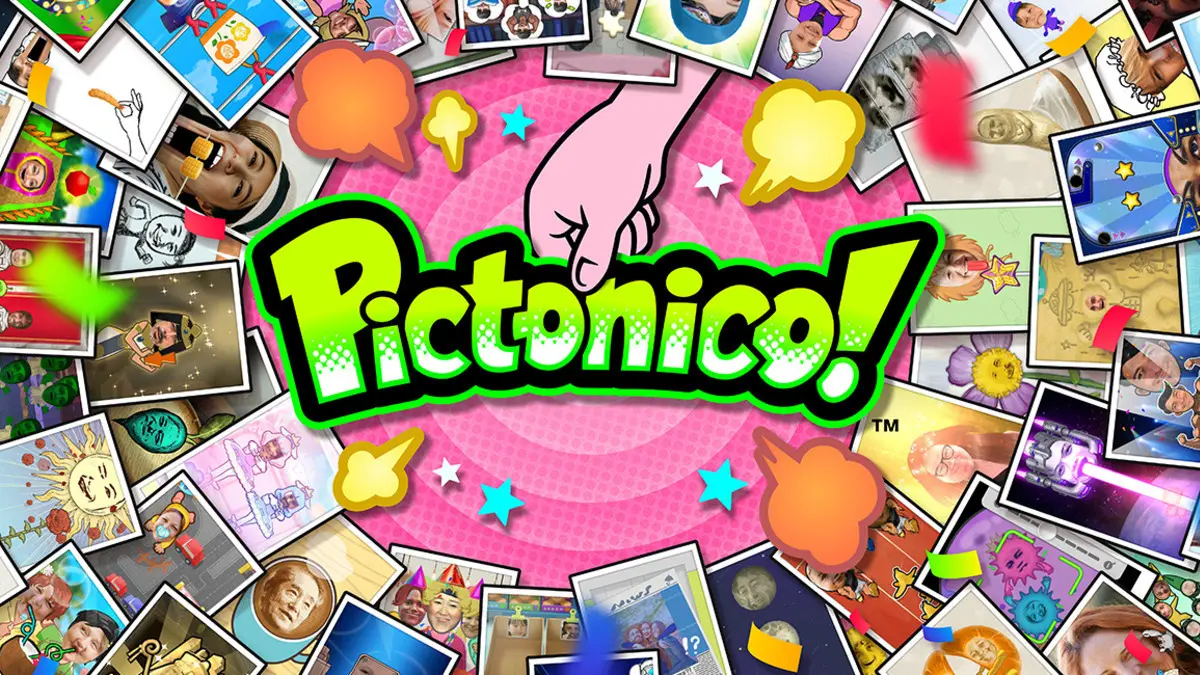
Nintendo has once again stepped into the mobile gaming arena with a new title that blends creativity and nostalgia. The game, called Pictonico, is now available for both Android and iOS devices. Unlike many of Nintendo's previous mobile experiments, Pictonico does not rely on beloved franchises like Mario or Zelda. Instead, it introduces a unique concept: turning your personal photos into interactive minigames. This approach feels fresh and personal, allowing players to see themselves and their friends inside fast-paced, wacky challenges reminiscent of the acclaimed WarioWare series.
The Concept: Your Photos, Your Minigames
Pictonico is fundamentally a collection of microgames, a format popularized by Nintendo's own WarioWare franchise. In WarioWare, players face a rapid succession of short, quirky tasks, often lasting no more than a few seconds. Pictonico adopts this same frantic energy but adds a twist: each minigame uses a photo you supply. You can either grant the app access to your device's photo gallery or take a new picture within the app itself. The game then superimposes interactive elements onto the image. For example, one minigame might require you to drag a person's mouth open to chomp on fruit, while another could involve lathering shampoo on a subject's head. These interactions are simple yet entertaining, and they leverage the emotional connection players have with their own images.
How It Works: Demo and Paid Volumes
Nintendo has adopted a freemium model for Pictonico. The base app is free to download and includes a demo that grants access to three sample minigames. This allows players to test the waters and see if the game resonates with them. To unlock the full experience, you need to purchase one or more of the available volumes. Volume 1 contains 50 minigames and is priced at $7.99. Volume 2 offers 30 additional minigames for $5.99. In total, there are 80 minigames across both volumes. Each volume also unlocks extra features: challenge stages, a Score Attack mode, and a Mix Mode that lets you play minigames from both volumes simultaneously. Given this structure, it's plausible that Nintendo may release further volumes in the future, expanding the library even more.
Gameplay and Features
The core gameplay loop in Pictonico is straightforward. You select a photo, and the game assigns a random microgame that uses that image. Each microgame has a clear objective: tap, drag, swipe, or rotate the screen to complete a task. Success depends on speed and precision. The Score Attack mode adds a competitive layer by tracking your best runs and encouraging replayability. The Challenge stages offer curated sequences that test your ability to adapt quickly. The Mix Mode is particularly clever, as it blends minigames from different volumes, adding variety and unpredictability. The interface is colorful and chaotic, staying true to the WarioWare aesthetic, with quirky sound effects and a playful tone.
Nintendo's Mobile Journey
Nintendo's history on mobile has been a mixed bag. The company entered the smartphone market in 2016 with Miitomo, a social app that failed to achieve lasting popularity. Subsequent releases like Super Mario Run, Fire Emblem Heroes, Animal Crossing: Pocket Camp, and Mario Kart Tour have had varying degrees of success. While Fire Emblem Heroes proved to be a financial hit, others, like Super Mario Run, struggled with their premium pricing model. Nintendo has often been cautious, avoiding the aggressive monetization tactics common in mobile gaming, such as gacha mechanics and abundant ads. Pictonico seems to continue that philosophy: the game offers a free demo, but full access requires a one-time purchase per volume, with no additional microtransactions. This approach respects players' wallets but may limit its reach compared to free-to-play competitors.
Why Pictonico Matters
Pictonico represents a strategic shift for Nintendo on mobile. Instead of porting established IPs or creating scaled-down versions of console games, Nintendo is experimenting with original concepts that leverage mobile-specific features, such as the camera and touchscreen. This aligns with the company's broader innovation strategy, which has historically prioritized novel gameplay over graphics or story. By using personal photos, Pictonico creates a sense of ownership and intimacy that traditional games cannot replicate. It also has viral potential: players are likely to share screenshots or videos of their customized minigames on social media, potentially driving organic downloads.
Comparison to WarioWare
WarioWare has been a beloved franchise since its debut on the Game Boy Advance in 2003. Its charm lies in its absurd humor, rapid pacing, and minimalist design. Pictonico borrows these elements but replaces Wario and his friends with your own photos. This means the game's personality shifts from the eccentric world of WarioWare to a more personal, user-driven experience. While WarioWare's minigames are carefully crafted around specific characters and scenarios, Pictonico relies on the player's own creativity and the randomness of their photo library. This makes each session unique. However, it also means the game lacks the narrative and character development that WarioWare fans might expect. Still, for a mobile game designed for short bursts, this trade-off is acceptable.
Technical Performance and Accessibility
The app appears to run smoothly on a range of devices. The camera integration is handled securely, with the app requesting permission to access photos only when needed. The minigames are responsive to touch inputs, and the load times are minimal. The user interface is simple, with a focus on the play button and volume selection. The game does not require an internet connection once the volumes are downloaded, making it suitable for on-the-go play. Accessibility options are limited, but the basic controls should be easy for most players to grasp. The font sizes and color contrasts are adequate for the small screen.
Pricing Structure Analysis
At $7.99 for Volume 1 and $5.99 for Volume 2, the total cost for all 80 minigames is $13.98. This places Pictonico in the premium tier of mobile games, especially compared to many free-to-play titles. However, given that each minigame offers a distinct interactive experience with your photos, the value proposition is reasonable. The demo allows you to try before buying, reducing buyer's regret. Nintendo could have chosen a subscription model or gacha mechanics, but they opted for straightforward purchases. This honesty may appeal to players tired of manipulative monetization. That said, the price might deter impulse downloads, as the average mobile user expects games to be free or very cheap.
Future Potential and Updates
The current structure leaves room for expansion. Nintendo could release additional volumes with new minigame themes, special holiday editions, or even user-generated content tools. Social features, such as sharing minigame results or competing with friends, would enhance replayability. There is also potential for limited-time events that offer exclusive minigames. Nintendo has a track record of updating its mobile titles with new content, as seen in Animal Crossing: Pocket Camp and Fire Emblem Heroes. If Pictonico gains traction, we might see regular updates that keep the experience fresh.
Market Reception and Early Reviews
Early impressions from players and critics are positive. The game has been praised for its originality and the way it leverages the camera. Some reviewers note that the minigame variety is strong, though the reliance on photos means the difficulty can vary based on the image quality and content. For instance, a photo with multiple people might make it harder to target the correct area. Others mention that the game's charm wears off after extended play because the core mechanics are simple. Nonetheless, the price point is seen as fair for the amount of content. The game currently holds a rating of 4.2 stars on the Google Play Store and 4.5 on the App Store, indicating a favorable reception.
Nintendo's Mobile Strategy in Context
Nintendo's mobile journey has been one of cautious experimentation. The company recognizes the massive potential of the mobile market, with billions of smartphone users worldwide. However, Nintendo also seeks to protect its brand identity, which is built on high-quality, family-friendly entertainment. This has led to a reluctance to adopt predatory monetization models. Pictonico follows that pattern: it is a self-contained product that does not compromise on quality. It is not a major revenue driver compared to console games, but it serves as a brand ambassador, introducing Nintendo's design philosophy to a mobile audience. Moreover, it can act as a testing ground for new ideas that might later appear on dedicated hardware.
Challenges and Competition
The mobile gaming market is saturated, with millions of apps vying for attention. Pictonico faces stiff competition from established genres like puzzle games, battle royales, and hyper-casual titles. Its unique selling point—using personal photos—is both a strength and a weakness. While it sets the game apart, it also imposes limitations. Not all photos lend themselves well to minigame interactions. Furthermore, privacy concerns may make some users hesitant to grant camera access. Nintendo has stated that the app does not upload or share photos, but skepticism remains. The company must address these concerns transparently to build trust.
Historical Context: Nintendo's Camera and Photo Innovations
This isn't Nintendo's first foray into camera-based gaming. The company released the Nintendo DSi in 2008, which included two cameras and a suite of fun photo-editing applications. The DSi allowed users to take pictures and incorporate them into games like WarioWare: Snapped! for DSiWare. That minigame collection used the DSi's camera to detect player movements and facial expressions. Later, the Nintendo 3DS expanded on this with augmented reality games and the Nintendo 3DS Camera app. Pictonico can be seen as a spiritual successor to those experiments, bringing the concept to modern smartphones with improved technology. The evolution of mobile cameras and processing power allows for much more sophisticated interactions than what was possible on the DSi.
Technical Requirements and Compatibility
Pictonico requires a device running Android 8.0 or later or iOS 13.0 or later. It is optimized for touchscreens and requires access to the camera for photo-taking mode. The app size is relatively small, around 150 MB, which is manageable for most users. It does not require high-end hardware, as the minigames are not graphically intensive. The game supports landscape and portrait orientations, but the minigames are designed for portrait mode, which is intuitive for one-handed play. The app also respects battery life, with no excessive drain during normal use.
Long-Term Engagement and Retention
For a collection of 80 minigames, the immediate replay value is high. However, after completing all challenges and mastering the score attack mode, players may seek new content. The absence of a multiplayer component or daily rewards could limit long-term engagement. Nintendo could introduce leaderboards, weekly challenges, or user-created minigames to sustain interest. Given the game's recent release, these features may be added later. The potential for seasonal events, such as Halloween or Christmas themed minigames, could also keep players returning.
Impact on Nintendo's Brand
By releasing an original game that does not rely on existing IP, Nintendo is signaling confidence in its creative ability. It shows that Nintendo is willing to take risks and explore new ideas, even on platforms where they have historically struggled. This move may endear the company to mobile-first audiences who might not own a Switch. At the same time, it reinforces Nintendo's image as a company that prioritizes fun and innovation above all else. If Pictonico succeeds, it could pave the way for more original mobile titles from Nintendo in the future.
Analyst Perspectives
Industry analysts have noted that Pictonico is a low-risk venture for Nintendo. The development costs are likely lower than those for a major console title, and the potential upside from in-app purchases and volume sales is modest but steady. The game also serves as a data point for understanding mobile user behavior. Some analysts believe this could be a blueprint for Nintendo's mobile strategy moving forward: small, unique, premium-priced games that complement the console ecosystem rather than compete with it. Others argue that the game's niche appeal will limit its market size, but for Nintendo, even a modest success on mobile is a step in the right direction opposite to the earlier failures.
User-Generated Content and Social Sharing
One of the most compelling aspects of Pictonico is its potential for virality. Players can record themselves playing minigames using their own photos and share the videos on social media. The absurdity of watching a friend's face being used in a high-speed vegetable-chomping game is inherently shareable. Nintendo has not yet integrated direct sharing features into the app, but it's easy to imagine a future update adding that functionality. YouTube and TikTok already have many videos of Pictonico in action, which helps with organic discovery. The game's simple visual style also makes it suitable for GIFs and short clips.
Privacy and Security Considerations
Given that Pictonico accesses personal photos, privacy is a top concern. The app only uses photos locally on the device; images are not uploaded to any server. The minigames process the image in real-time and do not store the data permanently. Nintendo has a strong track record of respecting user privacy, and the app's permissions are clearly stated during onboarding. Players can also revoke photo access at any time. Still, the company should maintain transparency by publishing a clear privacy policy and possibly issuing a statement about data handling. With increasing scrutiny on app permissions, this is crucial for user trust.
Comparison to Other Photo-Based Games
There have been other games that use the camera for augmented reality or photo integration. For example, Pokémon GO uses the camera to overlay Pokémon in the real world. FaceApp uses AI to edit faces. But few games integrate personal photos into the actual gameplay mechanics as thoroughly as Pictonico does. The nearest competitor might be something like Photo Lab or PicCollage, but those are editing tools, not games. Pictonico is a unique hybrid that combines creativity, humor, and fast-paced action. It fills a niche that no other major mobile game currently occupies.
Regional Availability and Language Support
Pictonico is available globally on both app stores. It supports multiple languages, including English, Japanese, French, German, Spanish, Italian, Portuguese, Russian, Korean, and Chinese. This broad localization is typical of Nintendo releases and ensures accessibility for international audiences. The language settings are automatically detected from the device's system language, or players can change them in the app's settings. The game's interface text is minimal, making translation straightforward. However, some puns or wordplays in minigame instructions may lose their humor in translation, but overall, the experience is consistent.
Conclusion of the Analysis
Pictonico is a refreshing addition to Nintendo's mobile lineup. It demonstrates that Nintendo can innovate within the mobile space without relying on its classic characters. By turning personal photos into minigames, the company has created a deeply personalized experience that resonates with users. The pricing model is fair, the gameplay is addictive, and the potential for growth is significant. Whether this will lead to a major mobile success story remains to be seen, but it certainly marks an encouraging step forward for Nintendo's mobile ambitions. The game is worth downloading for its quirky fun and the sheer joy of seeing your own face in a frantic minigame. If you own a smartphone and have a sense of humor, Pictonico is definitely a title to check out.
As Nintendo continues to explore mobile opportunities, Pictonico may well be the blueprint for future projects. For now, players can enjoy the 80 minigames across two volumes, with the possibility of more to come. The game is available now on the App Store and Google Play Store.
Source: Android Authority News