

Zelenskyy Signals Openness to Direct Putin Talks
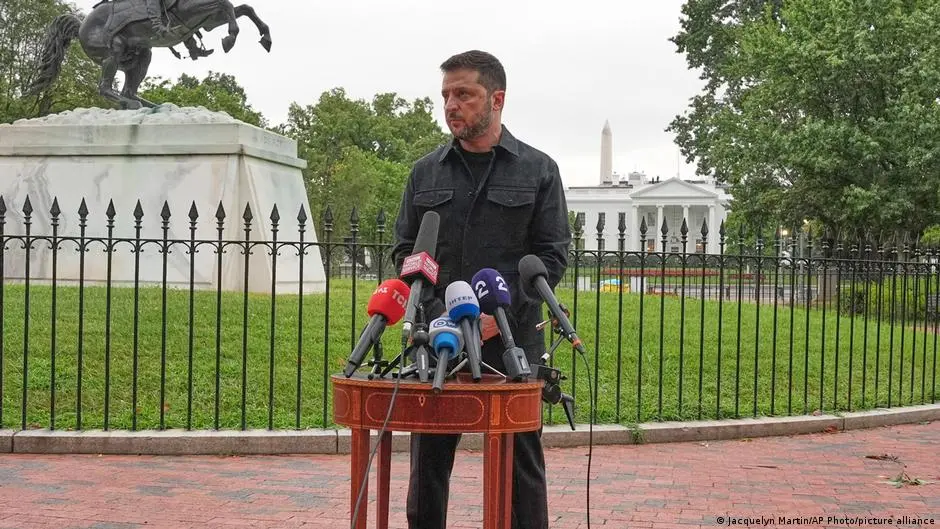
Ukrainian President Volodymyr Zelenskyy has stated unequivocally that he is prepared to meet with Russian President Vladimir Putin in a one-on-one format to end the ongoing war. Speaking to reporters after a series of high-stakes meetings at the White House, Zelenskyy said, "I confirmed — and all European leaders supported me — that we are ready for a bilateral meeting with Putin." He emphasized that he is open to "any type of format" without any preconditions, marking a significant shift in Ukraine's negotiating stance.
The announcement comes after US President Donald Trump hosted Zelenskyy, NATO Secretary General Mark Rutte, and several European leaders including German Chancellor Friedrich Merz and French President Emmanuel Macron. Trump revealed that he had called Putin after the meeting to begin arrangements for a face-to-face encounter between the two warring presidents. "At the conclusion of the meetings, I called President Putin and began the arrangements for a meeting, at a location to be determined, between President Putin and President Zelenskyy," Trump told reporters. He added that after that bilateral meeting, a trilateral meeting with all three leaders would follow.
Timeline and Conditions for Talks
German Chancellor Friedrich Merz confirmed that the meeting is expected within the next two weeks. "The American president spoke with the Russian president on the phone and agreed that there would be a meeting between the Russian president and the Ukrainian president within the next two weeks," Merz said, though the exact location remains to be determined. This accelerated timeline has raised both hopes and concerns among international observers.
While Zelenskyy's readiness for talks without preconditions marks a conciliatory gesture, other European leaders have urged caution. French President Emmanuel Macron expressed skepticism about Putin's intentions. "I am not convinced about Putin," Macron said, adding that he has "the greatest doubts about the Russian president's desire for peace." Macron warned that if the process fails, sanctions on Russia must be intensified to push Moscow back to the negotiating table.
German Foreign Minister Johann Wadephul, speaking during a visit to a US naval base in Japan, emphasized that any talks must begin with a ceasefire. "Someone needs to make a move and that someone is President Putin," Wadephul said. He stressed that Ukraine must "think very carefully" about the type of negotiations and the desired outcome, with lasting peace requiring strong security guarantees supported by both Germany and the United States.
Security Guarantees and NATO's Role
A central topic of the Washington talks was the provision of security guarantees for Ukraine post-war. NATO Secretary General Mark Rutte clarified that discussions are not about NATO membership but about "Article 5 type of security guarantees" for Ukraine. Article 5 is NATO's collective defense principle, meaning an attack on one member is an attack on all. Rutte said these guarantees would be discussed in more detail, but there was no talk of deploying ground troops at this stage.
President Trump confirmed that security guarantees for Ukraine, provided by European countries and coordinated by the US, were discussed. He emphasized that Europe would take the lead in ensuring Ukraine's security, with American coordination. Chancellor Merz also addressed the possibility of German peacekeepers in Ukraine, stating that "all of Europe should be involved" and that Germany has "a major interest and a major responsibility" in the political order of Europe. However, he noted that the exact extent of involvement requires further discussion among European partners.
Zelenskyy has long called for guarantees modeled on Article 5 to ensure that Russia does not attack again once a peace deal is signed. The Ukrainian leader hailed the promise of US coordination as "a major step forward." European Commission President Ursula von der Leyen described the moment as "important" and emphasized the need for "strong security guarantees for Ukraine and a lasting and durable peace."
Diplomatic Maneuvering and Background Context
The path to these talks has been anything but straightforward. Zelenskyy's previous visit to the White House in February ended in acrimony when his military-style attire drew scorn from President Trump, leading to an early departure without lunch. This time, Zelenskyy swapped his combat look for a sharp black suit, a change that won Trump's approval. When a reporter complimented his new look, Zelenskyy quipped, "You're wearing the same suit. I changed."
The Ukrainian leader has worn military-style clothing since Russia's full-scale invasion in February 2022 to show solidarity with his troops. However, after the February fiasco, he began shifting to more formal attire—wearing a black field jacket and shirt, buttoned to the collar but tie-less, at Pope Francis's funeral in April. The criticism over his earlier White House appearance was widely rejected in Ukraine, where Zelenskyy's wartime leadership has drawn broad support.
President Trump has positioned himself as a key mediator, with reports that he interrupted the White House talks to call Putin directly. The German newspaper Bild reported that Trump announced he would call Putin following the meeting with Zelenskyy, and the round of talks with European leaders resumed afterwards. NATO's Rutte praised Trump for breaking the deadlock with Putin, calling him "the one who broke the deadlock with President Putin by starting that dialogue back in February."
European Leaders' Perspectives and Broader Implications
While Zelenskyy's readiness for talks is a crucial step, European leaders remain divided on how to proceed. Macron has urged a broader quadrilateral format that includes European representatives alongside the US, Russia, and Ukraine. He argued that security guarantees must cover the entire continent, which is why Europe stands united with Ukraine. Macron also warned that should the negotiation process be rejected, sanctions on Russia would need to be ratcheted up.
German Foreign Minister Wadephul called the moment a rare opportunity to end the war and said every effort must be made to seize it. He insisted that Putin must first agree to a ceasefire and negotiate "in a truly substantive manner." He also made clear that any German involvement in security guarantees would require parliamentary approval.
The discussions come amid ongoing violence on the ground. Just days before the talks, Russia launched a massive missile and drone attack on Kyiv, killing at least 27 people, with Ukraine's president calling it one of the largest attacks on the capital since the war began. This underscores the urgency of a ceasefire and the fragility of the current moment.
The proposed meeting between Zelenskyy and Putin, if it takes place, would mark the first direct talks between the two leaders since the early months of the invasion in 2022. Previous attempts at negotiations have faltered over issues of territory, security guarantees, and the status of Russian-occupied areas. Russia currently controls about 20% of Ukraine's territory, including Crimea and parts of the Donbas and south-eastern regions.
The White House meeting also highlighted the evolving role of the United States under President Trump's "America First" foreign policy, which has emphasized burden-sharing with European allies. While Trump has been critical of NATO and European defense spending, his administration has taken a leading role in arranging the talks, with Vice President JD Vance, Secretary of State Marco Rubio, and Special Envoy Steve Witkoff tasked with making arrangements between the two countries.
Ukrainian civil society has expressed a mix of hope and wariness. Many Ukrainians fear that a rushed peace deal could reward Russian aggression and fail to provide lasting security. Zelenskyy's decision to drop preconditions for talks is seen by some as a necessary concession to keep the US engaged, while others worry it may signal weakness. The Ukrainian leader, however, has maintained that any agreement must ensure Ukraine's sovereignty and territorial integrity.
The international community is watching closely as the two-week window approaches. If a meeting takes place, it could represent the most significant step toward ending Europe's deadliest conflict since World War II. However, as Macron cautioned, the path from talks to peace is fraught with obstacles, and Putin's ultimate goals remain unclear. The coming days will determine whether this rare opportunity leads to a ceasefire or further disappointment.
Source: dw.com News