

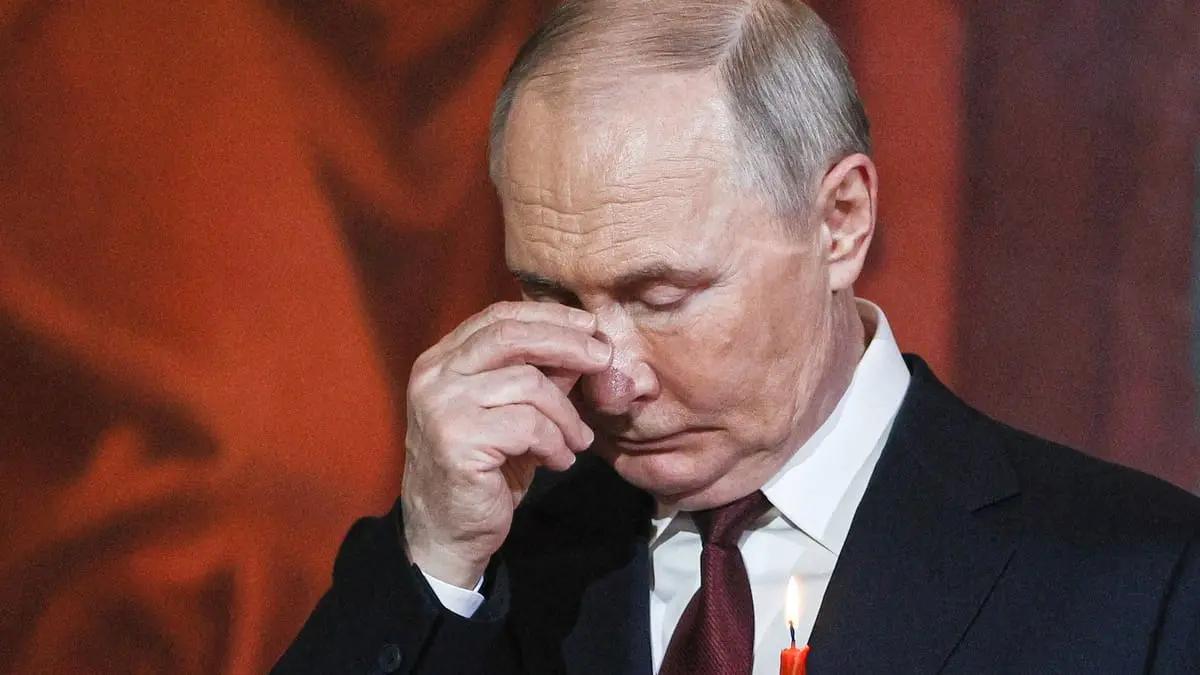
For years, Vladimir Putin has presented himself as the guardian of traditional values, a conservative leader protecting Orthodox faith and family. But according to Mikhail Rubin, a seasoned Russian investigative journalist who has covered Putin for over a decade, this image is a complete fabrication. In a detailed interview, Rubin dissects the myths surrounding Putin's personal beliefs, his relationship with religion, family, and women, revealing a man far removed from the persona he projects.
The Myth of the Conservative Leader
Rubin begins by stating that Putin has created a myth that has fooled many: Russians both inside and outside the country, and even Western observers. The image of Putin as a conservative champion is one he constructed for political convenience. But the reality is that Putin has no genuine commitment to the values he preaches. Instead, his actions and attitudes betray a deep inconsistency.
Putin's Superstition Over Religion
One of the key points Rubin makes concerns Putin's relationship with religion. While Putin frequently appears in public performing Orthodox rituals—crossing himself, attending church services, and speaking of faith—Rubin's sources reveal that Putin is deeply superstitious rather than truly religious. He recounts an incident where a black cat crossed Putin's path during a walk at his residence. In Russian superstition, this is a bad omen, and Putin crossed himself in response. This mix of mysticism and superstition is typical of many post-Soviet Russians, but it is far from the devout Orthodox image Putin projects. Rubin emphasizes that the Orthodox Church condemns superstition, yet Putin's behavior reflects a popular, folk religion rather than doctrinal faith.
Empty Talk of Family Values
Putin's rhetoric on family values is equally hollow. He often speaks about the importance of family, yet his own family history tells a different story. His divorce from Lyudmila Putina in 2013 did not harm his approval ratings, indicating that Russian society does not hold him to the same standards he preaches. Rubin points to Lyudmila's own recollections of her marriage: she described carrying heavy shopping bags and a stroller up six flights of stairs while pregnant, with Putin watching passively. Neighbors even scolded him for his lack of help. This episode starkly contrasts with his current talk of traditional family roles. Putin's understanding of family is patriarchal and pragmatic, not rooted in the values he espouses.
Patriarchal Attitudes and Mistrust of Women
Perhaps the most striking revelation is Putin's attitude toward women. Rubin states unequivocally that sources close to Putin confirm he does not trust women. This mistrust is typical of the patriarchal mindset that pervades Russia's political elite. Putin's humor is often sexist—for example, he has joked, "I don't have bad days, I'm not a woman," and made remarks that trivialize sexual assault. However, Rubin clarifies that Putin is not a misogynist in the sense of hating all women; he can appoint women to high positions if it suits his purposes, as seen with the head of the Central Bank or female deputy prime ministers. But this is more for show than a commitment to gender equality. Rubin draws a parallel to Soviet-era practices where women were placed in visible roles without structural change.
The Post-Soviet Context
Rubin explains that Putin's views resonate with many Russians because they reflect the country's fractured history. Russia went from a deeply religious society to an atheist state that demolished churches, and then back to a society that venerates the Orthodox Church. This has created a population with weak, inconsistent values. Polls show that a majority of Russians call themselves Orthodox, but only about one percent attend church regularly. Putin's blend of superstition, nominal faith, and patriarchal attitudes mirrors this national ambivalence. He is a product of the Soviet system, and his worldview remains fundamentally Soviet, even though he has spent most of his adult life in the post-Soviet era.
The Deception That Works
Putin's ability to maintain this facade, Rubin argues, comes from his understanding of the Russian people's psychological needs. He gives them a leader who embodies their own contradictions. The myths Putin has created are sticky because they are convenient for both the Kremlin and the public. But for Rubin, the truth is clear: Putin is not the conservative, religious, family-oriented leader he pretends to be. He is a deeply pragmatic and superstitious man who uses tradition as a tool of power.
Rubin's book, "The Tsar Himself: How Vladimir Putin Deceived Us All," co-authored with Roman Badanin, details these and other revelations. The interview provides a rare glimpse behind the carefully curated image of one of the world's most powerful and enigmatic leaders. As Rubin concludes, the gap between Putin's public persona and his private reality is vast, and understanding this is crucial for anyone trying to make sense of Russia's direction under his rule.
Source: t-online News