

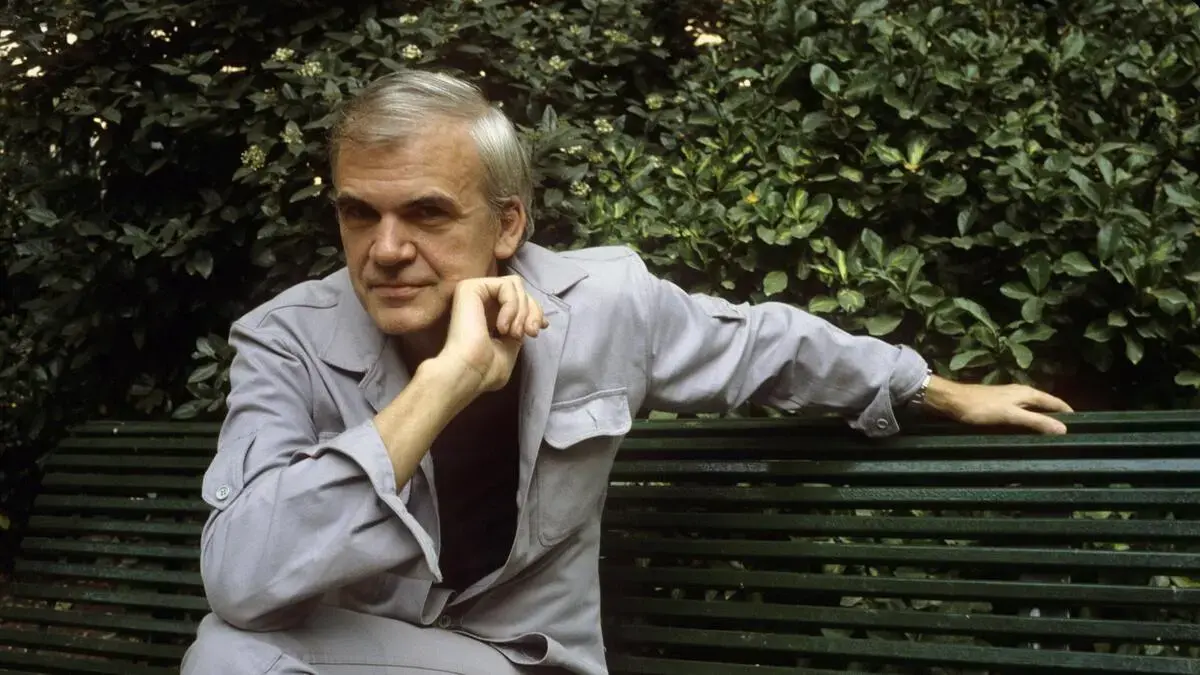
Milan Kundera, one of the most influential European novelists of the late 20th century, has died at the age of 94 in Paris, his adopted home. His death marks the end of a literary journey that spanned more than five decades and produced works celebrated for their philosophical depth, erotic playfulness, and sharp critique of totalitarianism. Kundera is best known for his novel The Unbearable Lightness of Being, which became a touchstone for readers grappling with questions of fate, freedom, and the meaning of life in a world stripped of certainties.
Early Life and Political Turmoil
Kundera was born on April 1, 1929, in Brno, Czechoslovakia, into a musical family. His father was a pianist and musicologist, and young Kundera studied composition before turning to literature. This musical background profoundly influenced his narrative style, which often employs leitmotifs, variations, and counterpoint. He joined the Communist Party in 1948, but his early enthusiasm for the socialist project soon soured. In the 1960s, he emerged as a leading figure in the reformist movement that culminated in the Prague Spring of 1968. His debut novel, Der Scherz (first published in Czech in 1965), dealt with the absurdity of ideological conformity and the personal cost of political exclusion.
The Soviet-led invasion of Czechoslovakia in August 1968 ended the Prague Spring and placed Kundera squarely in the crosshairs of the regime. He was expelled from the Communist Party, his books were banned, and he lost his teaching positions. In 1975, he was allowed to emigrate to France, where he settled first in Rennes and later in Paris. The experience of exile became a central theme in his work, not only as a physical displacement but as an existential condition—a state of permanent homelessness that could be both liberating and crushing.
Major Works and Themes
Kundera's novels often revolve around a small set of obsessions: the tension between lightness and weight, the burden of history, the nature of memory and forgetting, the seductive dangers of kitsch, and the impossibility of authentic love in a world governed by chance. The Unbearable Lightness of Being (1984) is his most famous exploration of these ideas. The novel juxtaposes the stories of Tomas, a womanizing surgeon; Teresa, his photographer wife; and Sabina, an artist and Tomas's lover. Through Nietzsche's concept of eternal return, Kundera asks whether a life that can never be repeated is unbearably light or gloriously free.
Other major works include The Book of Laughter and Forgetting (1978), a polyphonic novel that intertwines the political history of Czechoslovakia with a series of erotic encounters; Immortality (1990), which reflects on fame and the afterlife of literary characters; and Slowness (1995), his first novel written directly in French, where he critiques the speed and superficiality of modern culture. Kundera's later novels, such as Identity (1998), Ignorance (2000), and The Festival of Insignificance (2013), continued to refine his signature blend of narrative, essay, and philosophical meditation.
Literary Style and Language
Kundera was a meticulous stylist, deeply concerned with the music of language and the rhythm of sentences. He insisted on the centrality of the novel as a form of inquiry, not mere entertainment. In his essay collection The Art of the Novel (1986), he defined the novel as a medium that explores the ambiguities of existence, resisting definitive answers. His characters are often sketched with a light touch, more as philosophical positions than fully fleshed individuals, yet they remain deeply memorable because they embody universal dilemmas.
After his move to France, Kundera gradually shifted to writing in French. He claimed that this change allowed him to develop a new, stripped-down prose style, free from the verbal ornamentation he associated with Czech. However, critics have debated whether his French works achieve the same aesthetic power as his earlier Czech novels. Nonetheless, his linguistic versatility underscores his lifelong engagement with the politics of language and translation—a topic he explored in Betrayed Testament (1993), where he lambasted translators who betrayed the original voice of authors like Franz Kafka.
Throughout his career, Kundera maintained a fierce independence from literary fashions. He refused to be pigeonholed as a dissident writer, even though his novels often criticized communist regimes. He argued that the novel's purpose is to examine the human condition, not to serve political agendas. This stance sometimes put him at odds with fellow exiles and intellectuals, but it also ensured that his work retained a timeless quality beyond the historical circumstances that inspired it.
Later Years and Legacy
In his final decades, Kundera became increasingly reclusive. He gave few interviews and rarely appeared in public. Yet his influence on contemporary literature remained profound. Writers around the world have cited him as an inspiration, and his books continue to be read and debated. The Milan Kundera Library in his hometown of Brno, established in 2022 with the donation of his personal collection, stands as a testament to his enduring significance.
Kundera died on July 12, 2023, in Paris, leaving behind a body of work that challenges readers to embrace the complexity of life without falling into the traps of sentimentality or dogmatism. His novels remind us that the most serious questions often require a light touch, and that even in the face of history's heaviness, we can find moments of grace and meaning.
Source: Die Presse News