

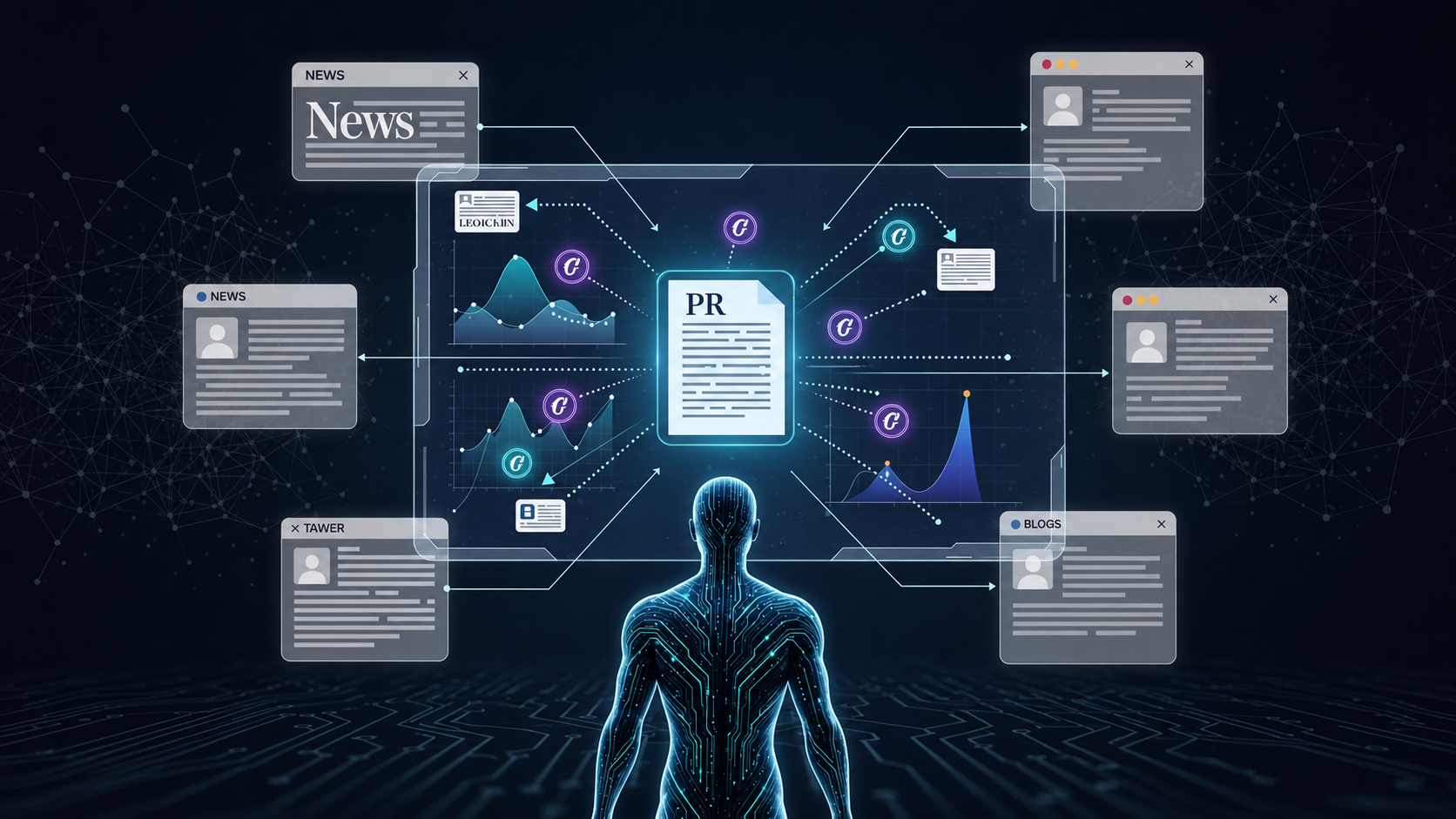
AI Visibility Tracking How Press Release Distribution Drives Verifiable Citations
Proving that your PR content gets cited by AI search engines requires tracking entity mentions, prompt visibility, and direct source attribution across generative assistants like ChatGPT, Perplexity, and Google Gemini. To verify AI citations, public relations professionals track generative summary outputs, monitor prompt query share, and analyze referral traffic originating from generative engines. Modern public relations success no longer depends solely on traditional media placement clippings or organic web rankings; it demands presence inside synthesized AI search results.
How do you prove your PR got cited by AI? You can prove AI citations by monitoring prompt responses across generative platforms, tracking unstructured brand references, analyzing referral web traffic from conversational assistants, and verifying indexing of syndicated press announcements. Utilizing structured syndication channels ensures large language models ingest and attribute your corporate news accurately.
Generative artificial intelligence has fundamentally altered how audiences discover news and technical insights. When users query conversational search assistants about industry leaders, emerging products, or executive opinions, these systems pull information directly from indexed news feeds. Partnering with a Top PR Agency allows organizations to optimize their corporate disclosures specifically for artificial intelligence ingestion pipelines. This strategic transition from traditional clip counts to AI visibility tracking empowers brands to measure the tangible commercial impact of earned media.
As generative engines rely on trusted data sources, structured syndication becomes essential for maintaining information integrity. Executing an effective campaign through targeted Press Release Distribution ensures that your corporate narrative enters the training and retrieval-augmented generation frameworks of leading AI platforms. This detailed guide explores how public relations teams can establish tracking protocols, measure synthetic citations, optimize press releases for generative discovery, and prove definitive ROI to key corporate stakeholders.
How AI search engines track and cite brand news across modern digital platforms
Generative artificial intelligence engines locate and synthesize corporate information through structured data ingestion, continuous web crawling, and Retrieval-Augmented Generation (RAG) architectures. When a press release reaches high-authority news syndication networks, search bots index the text and store facts within specialized vector databases. When a user asks a relevant question, the generative model retrieves these indexed vector fragments to build a comprehensive, conversational answer.
Working with an established PR Company helps ensure that your news release contains the semantic tags and entity relationships that large language models require. AI tools evaluate context, source credibility, and publication freshness before selecting which sources to cite in their synthesized answers. Consequently, press releases published on authoritative digital networks achieve higher citation frequency in conversational search tools than unverified self-published blog posts.
Understanding this content processing pipeline enables communications teams to tailor their releases for maximum generative indexing efficiency. By structuring press statements around factual entities, statistical data points, and direct leadership quotes, organizations significantly increase their chances of becoming canonical citations. Leveraging specialized Press Release Distribution Services further guarantees that your news content reaches major database aggregators that feed generative search tools.
Understanding the generative engine indexing process for press release syndication data feeds
Generative search engines utilize sophisticated web spiders to ingest syndicated press release content almost instantaneously upon publication. These spiders parse unstructured text into clear semantic nodes, identifying core organizations, key executives, proprietary product features, and primary industry concepts.
Collaborating with premier PR Firms ensures that your corporate news release adheres to standardized digital formatting requirements. When content is clear and structured, machine learning algorithms extract factual statements without distorting context or introducing hallucinations.
Analyzing how large language models ingest syndicated wire content from authoritative platforms
Large language models process syndicated wire content by evaluating semantic density and domain authority metrics. High-tier news portals provide clean HTML metadata that allows AI models to verify origin, timestamp, and entity authenticity. By utilizing a respected Online PR Agency, organizations present their disclosures in clean formatting formats that generative spiders parse instantly.
Differentiating traditional media clip monitoring from modern AI assistant citation tracking methods
Traditional media monitoring relies on identifying exact keyword mentions, tracking print publications, recording broadcast segments, and tallying backlink counts. In contrast, AI citation tracking focuses on tracking natural language answers, prompt market share, source reference footers, and synthesized brand sentiment.
Deploying comprehensive PR Distribution Services provides the broad digital coverage necessary to feed these generative engines across diverse industries. Unlike static clippings, AI citations evolve dynamically as user queries change and model weights receive updates.
Key differences in tracking direct hyperlinks versus natural language AI reference sources
Direct hyperlinks provide measurable referral traffic and explicit page-level domain authority signals for traditional search engine rankings. Natural language AI references, however, often cite facts directly within synthesized answers without always offering explicit click-through links. Monitoring exposure across popular PR Websites helps public relations professionals evaluate whether AI search models display explicit footnotes or unlinked brand attributes.
Essential frameworks to measure AI brand citations resulting from effective press release distribution
Measuring artificial intelligence brand citations requires systematic frameworks designed to evaluate conversational search responses. Public relations teams must establish clear benchmark metrics prior to launching major media campaigns to measure change effectively. Tracking prompt impression share, sentiment consistency, and entity co-occurrence allows organizations to quantify their market authority in AI search results.
Utilizing targeted News Distribution Services creates a permanent record of corporate announcements across high-authority news outlets. This verified digital footprint gives AI models the structured source materials they need to generate confident, cited answers. Establishing robust measurement models enables executives to see how wire distribution directly influences brand presence across AI platforms.
Frameworks should also measure how frequently AI assistants choose your press announcements over competitor communications when answering industry questions. As AI search interfaces replace traditional blue links, tracking your brand's presence in generative engine answers becomes essential for modern PR evaluation.
Establishing baseline AI visibility metrics before launching your targeted corporate news release
Before issuing a major announcement, public relations specialists must conduct a comprehensive baseline audit of current AI visibility. This baseline establishes how major chat engines summarize your company, identify key products, and perceive leadership expertise.
Auditing popular Press Release Websites helps identify where existing corporate coverage exists and where AI models face information gaps. Documenting baseline search responses ensures that post-campaign evaluation accurately measures visibility increases generated by new press release syndication.
Auditing prompt responses across major AI engines prior to press release publishing
To conduct a prompt baseline audit, enter standardized natural language queries into ChatGPT, Google Gemini, Claude, and Perplexity. Record whether your brand is cited, what source URLs are referenced, and whether the generative system displays accurate company details. Engaging a Press Release Distribution Company ensures post-audit press releases achieve wide syndication that addresses documented information gaps in AI knowledge bases.
Identifying key conversational search queries where your brand should appear as answer content
Conversational search queries differ significantly from traditional short keyword searches. Users ask generative assistants detailed questions, such as requesting vendor recommendations, product feature comparisons, or industry trend analyses.
Utilizing a high-performing PR Platform enables communications teams to publish detailed announcements that directly answer these complex user questions. Aligning press release phrasing with real user search queries increases the likelihood that AI assistants will cite your releases as definitive answer sources.
Mapping targeted press release topics to natural user queries in generative search engines
Content mapping involves aligning specific press release sections with common user questions, enterprise decision criteria, and industry pain points. Incorporating exact question-and-answer structures into press release body copy creates clear text snippets that AI engines extract easily. Selecting a feature-rich Press Release Distribution Platform helps place these optimized releases across top-tier media channels for rapid machine indexing.
Advanced tools and methodologies for monitoring generative search engine references and citations
Monitoring AI citations requires specialized software platforms and manual testing procedures designed to capture generative search outputs. Standard web analytics tools often miss conversational search queries because AI engines frequently synthesize information without directing users to external websites. Modern tracking tools query AI models continuously using broad sets of industry prompts to document citation growth over time.
Partnering with Specialized PR Agencies provides access to proprietary monitoring platforms designed specifically for generative search tracking. These platforms measure prompt impression share, citation footers, brand recommendation rates, and source URL attribution across generative search applications. Combining automated tracking software with qualitative manual prompt reviews delivers a complete picture of your brand's artificial intelligence footprint.
Consistent tracking helps public relations teams quickly identify incomplete summaries, uncredited references, or hallucinated facts in AI outputs. With this intelligence, organizations can issue targeted media updates through wide syndication channels to correct inaccurate AI responses.
Automated citation monitoring platforms designed to track AI summary outputs and links
Automated AI monitoring platforms regularly query generative engines with target buyer prompts to track brand visibility trends. These systems capture daily screenshots, track source footnotes, record sentiment shifts, and generate real-time alerts whenever your corporate announcements receive citations.
Publishing releases through established Newswire Services supplies these automated tools with clear, verifiable source documents across trusted news networks. Automated tracking eliminates the manual burden of checking dozens of generative models individually, giving PR teams objective metrics to present to stakeholders.
Evaluating real time analytics tools for capturing brand references in generative answers
Modern analytics applications track how frequently generative engines draw answers from your press announcements versus third-party news coverage. These systems display detailed dashboards showing prompt rank, citation URLs, source trust scores, and brand share of voice. Distributing releases via premier Press Release Wire Services provides the initial authority foundation required to secure long-term placement in these analytics tracking platforms.
Manual prompt audit strategies for verifying brand citation depth across major chat assistants
While automated tools provide scale, manual prompt auditing allows communications specialists to evaluate the depth, accuracy, and nuance of AI citations. PR teams craft tailored buyer personas and run multi-step conversational scenarios across multiple AI models to analyze detailed recommendation behaviors.
Leveraging multi-channel Newswire Distribution ensures that AI assistants retrieve consistent, authoritative factual information across all manual test scenarios. Manual testing reveals exact sentence structures and key messaging points that AI search models frequently incorporate into their synthesized answers.
Structuring standardized test prompts to test AI recall of distributed press release data
Standardized test prompts should reflect actual client inquiries, commercial evaluation questions, and specific technical comparison requests. Testing prompt variations helps evaluate how well AI models recall specific facts, financial data, and leadership statements from your news releases. Working alongside top Newswire Companies guarantees that distributed corporate facts are indexed reliably across all target AI testing platforms.
Evaluating press release distribution pricing to ensure maximum return on AI tracking investment
Investing in press release distribution requires assessing cost structure options to balance distribution reach with budget realities. Pricing structures vary widely based on geographical target areas, industry trade distributions, media list sizes, and multimedia capabilities. Assessing options using transparent Press Release Distribution Pricing guides helps PR professionals build cost-effective plans that maintain high AI indexing rates.
Evaluating return on investment involves comparing distribution expenses against earned generative search impressions, brand citation authority, and organic traffic gains. High-tier distribution channels often command higher prices, but they provide stronger domain authority signals that generative AI models rely on for citation accuracy. Investing in quality distribution ensures your releases appear on platforms that AI search bots index and trust.
Understanding pricing variables helps marketing directors allocate budget efficiently across domestic, international, and specialized industry distribution channels. Maximizing PR investment requires selecting distribution packages that offer broad syndication across high-authority news platforms.
Analyzing cost structure variables in premium syndication packages for AI engine indexing
Distribution package pricing is governed by word limits, target geographic locations, industry trade targeting, and multimedia inclusion options. Premium syndication tiers include placement on major national news portals, financial database terminals, and high-authority industry trade publications.
Reviewing competitive Newswire Pricing structures allows PR managers to select distribution networks that provide strong domain authority without overextending budget limits. Broad distribution platforms ensure corporate announcements reach the high-trust websites that AI search engines draw from during synthesis.
Determining budget requirements for wide wire syndication across high authority digital news channels
Budget calculations must weigh the costs of broad wire syndication against the long-term value of establishing permanent AI citations. Securing placements on authoritative, high-traffic news portals creates lasting reference points for generative search models. Comparing transparent PR Distribution Pricing options enables organizations to plan long-term PR strategies that build continuous AI visibility affordably.
Calculating ROI by connecting PR distribution costs to generated AI search impressions
Calculating return on investment involves measuring total distribution expenditures against verified AI citation volume, prompt visibility, and referral web traffic. By tracking prompt share expansion, PR teams can quantify the value of AI search visibility in financial terms.
Reviewing detailed PR Services Pricing options ensures public relations investments remain aligned with corporate marketing objectives and financial performance metrics. Connecting media investments directly to generative AI citations provides executive leadership with clear proof of public relations campaign value.
Measuring the long term financial value of permanent AI citations from press releases
Unlike short-term digital ads, press releases archived on high-authority news portals provide long-term reference material for AI search engines. Generative models continue to reference these historical news disclosures for months or years after distribution. Choosing structured Press Release Distribution Packages creates long-term digital authority that generates sustained ROI across AI search platforms over time.
Strategic content optimization techniques that encourage AI assistants to cite your releases
Optimizing press releases for generative AI engines—often called Generative Engine Optimization (GEO)—requires clear content formatting, verified factual data, and structured language. AI search bots prefer structured content, well-defined entity relationships, bulleted lists, and explicit subject-verb-object sentence structures. Writing releases that contain clear, self-contained facts makes it easier for language models to extract and cite your news disclosures.
Incorporating Affordable PR Distribution options into your outreach strategy ensures you can maintain high publishing consistency without exceeding budget limits. Consistent press release publishing builds a continuous stream of fresh, verified facts across authoritative news networks. AI search engines naturally favor brands that maintain updated, well-structured digital news footprints over companies with infrequent corporate disclosures.
Optimization also involves using clear definition statements, precise industry terminology, and unambiguous corporate titles within every news release. Avoid figurative language, complex metaphors, or vague claims that can confuse AI parsing algorithms during content extraction. Clear, factual communications consistently secure higher citation rates across all major generative search interfaces.
Formatting press announcements with clear data structures for AI extraction and quoting
To maximize AI extraction efficiency, structure your press releases with clean formatting elements like direct lead paragraphs, clear subheadings, and bold summary points. AI models parse organized content faster and with lower error rates than unstructured text blocks.
Providing explicit quote attributions with complete executive titles helps AI engines accurately associate leadership commentary with your brand. Clean semantic layout ensures generative tools summarize your corporate news accurately without omitting essential context.
Incorporating clear statistical statements and entity relationships within your news release text
Generative AI models prefer incorporating precise numbers, percentage updates, research metrics, and clear entity descriptions into their synthesized answers. Frame statistics using simple declarative sentences, such as "Company X achieved Y percent growth in year Z." This formatting enables AI engines to extract factual statements easily and cite your release as the primary source document.
Optimizing release headlines and lead paragraphs for high priority generative search context
The headline and lead paragraph are the most critical components of any press release for both human readers and AI crawlers. Generative search tools place higher weight on opening text when determining subject relevance and core factual takeaways.
Draft headlines that contain your primary brand name, main product innovation, and specific industry context in clear, concise language. Opening paragraphs should directly address the classic journalistic questions: who, what, when, where, why, and how.
Drafting direct answer summaries inside press releases to trigger immediate AI engine citations
Include a bulleted "Executive Summary" or "Quick Take" block at the top of your press release directly beneath the main headline. Summarize core facts into two or three crisp sentences that answer common industry queries directly. This structured summary format mirrors how generative search tools display answers, encouraging AI models to quote your news release directly.
Working with a top PR agency to streamline AI visibility reporting and campaign attribution
Navigating the complexities of artificial intelligence visibility tracking often requires specialized tools, experienced talent, and dedicated technical resources. An experienced agency partner brings deep expertise in generative engine optimization, advanced prompt tracking platforms, and structured reporting methodologies. Agencies help corporate clients transition smoothly from legacy PR metrics to modern generative search attribution models.
Collaborating with a dedicated team allows organizations to build custom AI visibility dashboards, map prompt opportunities, and refine distribution schedules. PR agency professionals analyze generative search trends across your industry sector to identify high-value prompt queries where your brand needs stronger visibility. With these insights, agencies craft optimized press campaigns that place your brand in authoritative conversational search answers.
Additionally, specialized agencies help manage complex attribution scenarios, such as tracking multi-channel buyer journeys that begin with an AI search interaction. By combining press release syndication with advanced AI tracking frameworks, agencies deliver measurable results that demonstrate clear commercial value to executive leadership.
Selecting agency partners equipped with advanced artificial intelligence tracking and reporting technology
When selecting a public relations partner, evaluate their technical infrastructure, AI tracking tools, and experience with generative search analytics. Ask prospective agencies to explain their processes for tracking AI citations, monitoring prompt visibility, and optimizing releases for generative crawlers.
An agency partner should provide clear methodologies for verifying how syndicated wire announcements translate into verifiable citations inside ChatGPT, Gemini, and Perplexity. Choosing an agency with modern technology ensures your public relations programs stay ahead of digital search developments.
Key questions to ask agency leadership regarding their AI search citation tracking capabilities
What automated platforms and manual processes do you use to measure brand visibility across generative search engines?
How do you track prompt share of voice and citation footnotes resulting from syndicated press release campaigns?
What strategies do you use to optimize press release content for machine learning ingestion and vector retrieval models?
How do your reporting frameworks connect AI brand citations directly to customer engagement and business outcomes?
Presenting comprehensive AI attribution reports to corporate executives and key enterprise stakeholders
Executive leadership requires clear, data-driven reports that connect PR expenditures to core commercial objectives and market share growth. AI attribution reports should highlight prompt impression trends, brand citation share, source footers, and comparative competitor visibility.
Presenting visual side-by-side comparisons of AI search answers before and after your press release campaigns clearly illustrates campaign impact. Frame AI visibility gains around fundamental business outcomes, such as expanded brand authority, improved organic search presence, and increased market mindshare.
Creating visual dashboards that link distributed wire content directly to AI answer share
Effective visual dashboards display prompt ranking metrics, citation counts, brand sentiment scores, and distribution reach within an easy-to-read interface. Group metrics by campaign release, product line, or geographical region to show performance clearly across business units. Visualizing distribution data alongside AI citation gains provides executive stakeholders with clear proof of public relations effectiveness.
Overcoming common challenges in proving PR citations within AI generated engine summaries
Tracking citations in generative search engines presents unique technical challenges, including uncredited brand mentions, shifting model weights, and occasional AI hallucinations. AI models sometimes synthesize corporate news content accurately without adding explicit footnotes or external source links. Public relations professionals need strategies to identify unlinked brand references and convert them into verifiable citations over time.
Another challenge involves information dynamic updates within large language model knowledge bases. Generative search tools update their index caches and algorithm parameters continuously, causing conversational answers to vary over time. Maintaining high press release publishing frequency across authoritative wire channels ensures your brand remains consistently visible throughout model updates.
Addressing these technical hurdles requires persistent monitoring, refined optimization practices, and proactive content syndication strategies. By applying structured tracking methods, PR teams can overcome attribution gaps, correct erroneous AI outputs, and maintain clear campaign accountability.
Managing uncredited brand mentions and indirect citations in generative search assistant outputs
Uncredited brand mentions occur when an AI model utilizes factual details from your press release but omits direct footnotes or brand attribution. This happens because generative models condense insights from multiple indexed web sources into a single synthesized text response.
Monitoring unique phrasing, specific technical figures, and executive quotes from your releases helps identify uncredited corporate references inside AI answers. Tracking these indirect mentions provides a complete understanding of your total brand influence across conversational search platforms.
Strategies for converting unlinked generative AI mentions into verifiable direct attribution links
To encourage AI engines to include explicit source links, publish releases with unique data points, proprietary survey findings, or distinct brand terminology. When an AI engine references these unique data elements, it is significantly more likely to display direct citation links. Consistently syndicating high-authority original research establishes your company as the canonical source that AI search engines credit directly.
Dealing with hallucinations and incorrect brand disclosures across automated intelligence response channels
AI hallucinations occur when generative search platforms display inaccurate factual information, outdated corporate data, or incorrect product details. These errors usually stem from outdated web sources, conflicting online mentions, or insufficient authoritative reference data.
Issuing fresh, highly structured press releases across high-authority wire networks is the fastest way to correct AI hallucinations. Generative search crawlers prioritize recent, structured factual disclosures from trusted news sites, allowing fresh press releases to overwrite outdated training data.
Correcting inaccurate AI summaries by reissuing updated schema optimized press release distributions
When an AI engine displays incorrect corporate information, draft a corrective press release featuring precise schema markup and unambiguous factual statements. Distribute the release across high-authority news platforms to ensure rapid search engine indexing and caching. The fresh, authoritative news release updates the AI's retrieval memory, replacing hallucinated content with verified corporate facts.
Frequently Asked Questions About AI Visibility Tracking and PR Citation
What is AI visibility tracking in modern public relations?
AI visibility tracking measures how frequently and accurately generative search tools cite your brand, executives, or corporate news releases. Unlike traditional media monitoring, AI tracking focuses on synthesized answer presence, prompt market share, conversational context, and citation footnotes within platforms like ChatGPT, Perplexity, and Google Gemini.
How do search engines cite press releases in generative answers?
Generative search engines cite press releases by crawling high-authority news sites, vectorizing content, and retrieving factual snippets during user query processing. When a user asks a relevant prompt, the generative engine synthesizes these indexed facts and displays explicit citation links or footnote references directing users back to the original press release.
Why are traditional clip metrics no longer sufficient for PR measurement?
Traditional clip metrics only capture explicit media placements and domain backlinks, ignoring the millions of user queries answered directly inside conversational search interfaces. AI search tools answer user questions directly without always generating traditional website clicks, making prompt impression tracking and AI answer share essential for modern PR evaluation.
Can a press release directly influence ChatGPT or Google Gemini search outputs?
Yes, publishing a press release on high-authority wire networks directly influences ChatGPT, Google Gemini, and Perplexity search answers. Generative search bots index authoritative press releases quickly, integrating verified facts, leadership quotes, and product updates into their Retrieval-Augmented Generation (RAG) knowledge stores to answer real-time user prompts.
How long does it take for a press release to appear in AI search results?
Syndicated press releases published on high-authority news networks can appear in generative search outputs within hours or days. Fast-indexing platforms like Perplexity and Google Gemini update real-time web retrieval indexes rapidly, while other models integrate fresh syndicated news statements into their knowledge memory during routine index refreshes.
How do I track unlinked brand citations inside conversational AI search models?
Tracking unlinked brand citations involves monitoring conversational prompt outputs for proprietary product names, unique statistical data, executive quotes, and distinct phrase structures. Specialized AI tracking software and systematic prompt testing help public relations teams identify where generative models incorporate corporate disclosures without explicit attribution links.
What content formatting techniques help press releases rank better in AI assistants?
To rank effectively in AI search assistants, structure press releases with clear headings, direct bulleted takeaways, factual lead paragraphs, and unambiguous entity references. Use precise schema markup, frame key statistical figures cleanly, and avoid complex jargon to help language models parse, extract, and cite your corporate news accurately.
How does press release syndication affect generative AI engine indexing authority?
Press release syndication distributes corporate news across hundreds of authoritative digital news portals simultaneously. Generative AI engines place higher trust in facts corroborated across multiple high-authority domains. Broad wire syndication creates multiple verified touchpoints that confirm your corporate statements, boosting model confidence and citation frequency in search outputs.
How can a PR agency help track and improve AI search brand citations?
A specialized PR agency provides advanced AI monitoring software, custom prompt tracking frameworks, and expert content optimization strategies tailored for generative search engines. Agencies identify key prompt opportunities, structure schema-optimized media releases, and build executive attribution reports that connect PR distribution directly to measurable AI visibility gains.
What is the best way to correct inaccurate AI information about my company?
The fastest way to correct inaccurate AI information is to distribute an updated, schema-optimized press release across trusted wire networks. Generative crawlers prioritize fresh, authoritative factual statements from high-authority news domains, allowing updated wire releases to overwrite outdated knowledge and eliminate hallucinations across AI search platforms.
Mastering AI Visibility Tracking for Public Relations Success
Measuring PR campaign performance has evolved beyond basic media clip counts, impressions, and domain backlinks. As conversational assistants transform digital search, learning to track and optimize for AI citations is essential for modern public relations success. By establishing baseline prompt metrics, leveraging advanced tracking software, and structuring press releases for machine ingestion, communications specialists can prove the direct commercial value of their PR efforts.
Syndicating corporate disclosures across high-authority news networks remains the foundation of strong AI search visibility. Generative language models rely heavily on verified news sources to generate factual, trustworthy answers for user queries. Implementing structured distribution plans backed by clear Startup & Small Business PR Pricing options ensures organizations of all sizes can build a strong, persistent presence inside conversational AI platforms.
Public relations teams that embrace AI visibility tracking gain a clear competitive edge in corporate narrative control. Demonstrating verified prompt visibility, authoritative citation footnotes, and expanded brand mindshare provides executive stakeholders with clear proof of PR return on investment. Adopt generative search optimization today to ensure your company's news is discoverable, cited, and influential across the AI-driven search landscape.