

In summary: Anthropic's CEO, Dario Amodei, engaged in a meeting with White House Chief of Staff Susie Wiles and Treasury Secretary Scott Bessent on Friday. The White House characterized the discussions as 'productive and constructive' concerning access to Mythos, an advanced AI model adept at uncovering numerous zero-day vulnerabilities. This meeting indicates a potential easing of the standoff initiated when the Pentagon blacklisted Anthropic for its refusal to lift safety restrictions, with any potential agreement likely to exclude the Defense Department and facilitate Mythos access through civilian agencies.
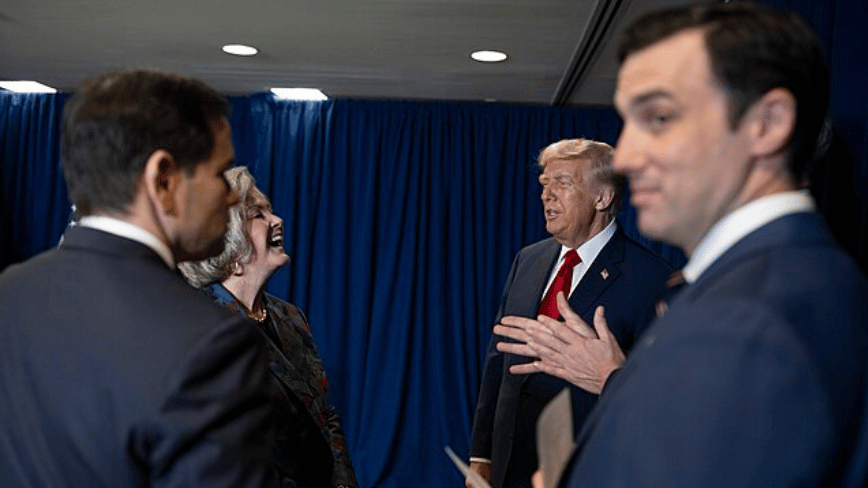
On Friday, Amodei entered the West Wing for discussions with Wiles and Bessent, where the White House described their conversation as 'introductory, productive, and constructive.' The trio explored 'collaboration opportunities' and strategies for addressing the challenges tied to scaling this transformative technology. President Trump, however, later expressed that he was unaware of the meeting's occurrence.
This gathering marks a crucial move towards resolving a conflict that has resulted in one of the leading AI firms being blacklisted by its own government, while that same government strives to access its most powerful model. Should an agreement be reached, it would likely exclude the Pentagon, directing Mythos access through civilian agencies unconnected to the initial dispute.
Background of the Conflict
The discord commenced in late February when Defense Secretary Pete Hegseth insisted that Anthropic provide the Pentagon unrestricted access to its AI models for 'all lawful purposes,' which included autonomous weapon systems and domestic surveillance. Amodei declined, asserting that while Anthropic is open to collaborating with the military, the reliability of AI models for such applications remains insufficient, and U.S. law has not yet adapted to adequately safeguard Americans from the implications of AI in mass surveillance. Hegseth's subsequent designation of Anthropic as a national security supply-chain risk—a classification typically reserved for firms linked to foreign adversaries—effectively blacklisted the company from government contracts.
In early March, Anthropic initiated legal action against the Trump administration, filing two federal lawsuits alleging wrongful retaliation. A federal judge initially blocked the blacklisting, but an appeals court overturned that ruling on April 8. Currently, Anthropic is barred from Department of Defense contracts but maintains the ability to collaborate with other government entities. Following the adverse court ruling, Anthropic engaged consultants from Trump’s circle to facilitate a political resolution, with Friday's meeting reported to be a step towards achieving a deal.
The ironic situation leading Amodei to the White House is that Anthropic announced Mythos on April 7, just ten days after losing its appeal, and the model turned out to be indispensable to the government.
Capabilities of Mythos
Mythos is a versatile AI model that demonstrated an ability during testing to identify and exploit thousands of previously unknown zero-day vulnerabilities across all major operating systems and web browsers. It successfully detected flaws that had eluded human scrutiny for decades, and when tasked with creating working exploits, it achieved success on the first attempt over 83% of the time. Additionally, it is the first AI model to complete a 32-step corporate network attack simulation entirely. The UK’s AI Security Institute has rated it as 'substantially more capable at cyber offense than any model previously assessed.' Jamie Dimon, CEO of JPMorgan Chase, remarked that it 'reveals a lot more vulnerabilities' for cyberattacks, while the Council on Foreign Relations described it as 'an inflection point for AI and global security.'
Anthropic opted against a public release of Mythos; instead, it established Project Glasswing, a controlled access initiative granting the model to approximately 40 vetted organizations, including tech giants like Amazon Web Services, Apple, Google, Microsoft, Nvidia, and JPMorgan Chase, with the aim of identifying and rectifying vulnerabilities before they can be exploited. The company has also committed up to $100 million in Mythos usage credits and $4 million to open-source security organizations. This decision to restrict rather than release directly reflects the safety principles that initially led to the conflict with the Pentagon.
Objectives of Each Party
The Treasury Department is interested in utilizing Mythos to identify vulnerabilities within its own systems, with parts of the intelligence community and the Cybersecurity and Infrastructure Security Agency already testing it. The Office of Management and Budget is working on establishing protections for federal agencies to employ a controlled version of Mythos. Bessent’s participation in the meeting on Friday indicates that the economic and security considerations for Mythos access have reached the highest levels of the administration.
Anthropic, on the other hand, seeks to have the blacklisting lifted—not due to a reliance on Pentagon revenue, as the company’s annualized revenue has hit $30 billion and it is exploring an IPO with an $800 billion valuation. However, the supply-chain risk designation undermines its credibility in the enterprise sector and generates uncertainty for all government-adjacent clients. Amodei aims for a resolution that allows the restoration of his company’s reputation without compromising the safety commitments that sparked the initial disagreement.
Plausibly, a compromise could allow Anthropic to provide Mythos access for defensive cybersecurity purposes through civilian agencies, while the administration would retract or narrow the supply-chain risk designation. The Pentagon would remain excluded unless a separate evaluation process for specific military applications can be established. Both parties have incentives: Anthropic desires to mitigate the commercial damage of the blacklisting, while the White House recognizes the critical value of the technology.
International Pressures
The diplomatic aspect adds a layer of urgency to the situation. Anthropic intends to offer Mythos to selected British banks imminently and is expanding its London office to accommodate 800 staff members. The Governor of the Bank of England, Andrew Bailey, identified Mythos as a cybersecurity threat in a recent speech, leading to emergency meetings with top executives from the UK’s largest banks and key government entities. Canadian Finance Minister François-Philippe Champagne labeled Mythos as an 'unknown unknown' during recent IMF discussions.
This scenario creates a situation where America's closest allies may gain access to a vital national security asset before the U.S. government does, adding geopolitical pressure for the White House to resolve the ongoing dispute that goes beyond the original safety disagreements. Bessent, representing the Treasury Department, one of the agencies most eager for Mythos access, likely emphasized this point during Friday's discussions.
Significance of the Meeting
The term 'introductory' used in the White House's summary is deliberately chosen. It indicates that Wiles and Bessent are initiating a dialogue rather than finalizing an agreement. The ongoing litigation remains active, the appeals court ruling is still in effect, and Hegseth has not rescinded his designation. Nonetheless, the mere fact that the White House Chief of Staff and the Treasury Secretary engaged with the CEO of a blacklisted company, labeling their conversation as productive, signifies a notable shift in the administration's stance that would have seemed unlikely merely six weeks ago.
Amodei has crafted what is now the most advanced cybersecurity tool as a byproduct of developing a general-purpose AI model, subsequently restricted its release based on safety concerns, faced government sanctions for adhering to those safety principles, and is now being pursued by that same government due to the tool's irreplaceable nature. This series of events is unfolding outside the confines of congressional hearings or regulatory proceedings, taking place in the West Wing where top officials are striving to formulate a resolution that aligns national security, commercial realities, and the safety principles that instigated the initial conflict. Although Friday's meeting did not yield a definitive solution, it established that all parties involved are eager to find one.