

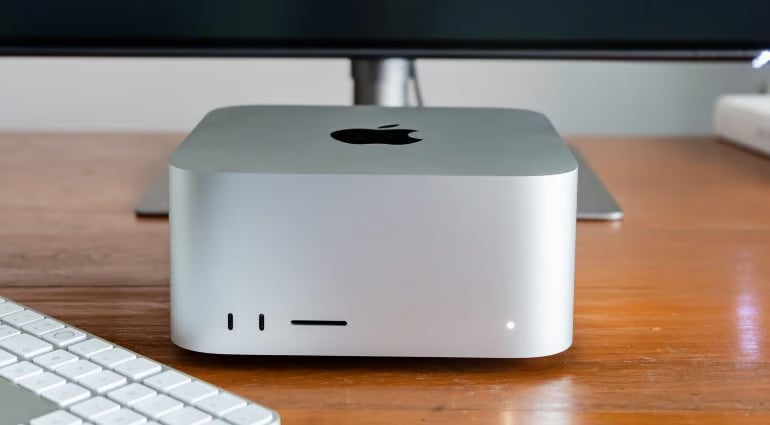
Apple’s desktop Mac lineup is undergoing a significant contraction, as the company quietly removes several high-RAM configurations from the Mac Studio and Mac mini. The changes, reflected on Apple’s online store this week, are driven by surging demand for AI-capable machines and a persistent global shortage of memory chips. Buyers now face fewer upgrade options, longer shipping delays, and in some cases, higher starting prices.
The most dramatic cut affects the high-end M3 Ultra Mac Studio. Previously available with up to 256GB of unified memory, the machine is now capped at 96GB. The M4 Max Mac Studio has also lost its 128GB memory option. Meanwhile, the M4 Pro Mac mini no longer offers a 64GB RAM configuration, leaving only 24GB and 48GB variants. Even the standard M4 Mac mini has been stripped of its 32GB memory version, now limited to 16GB and 24GB. These removals follow an earlier March move that eliminated the 512GB memory option for the Mac Studio and a reduction of the Mac mini’s base storage, which effectively raised its starting price from $599 to $799.
These changes are not just about product simplification; they reflect a deeper supply chain crisis tied to the artificial intelligence boom. Apple’s unified memory architecture, which integrates RAM directly into its M-series chips, has become a favorite for developers running local AI models and agentic AI software. The ability to quickly access large memory pools on a desktop machine is crucial for training and inference tasks. As AI adoption skyrockets, so does demand for high-memory Macs, outpacing Apple’s ability to secure sufficient DRAM chips. The global memory shortage, already acute due to AI server demand, has now spilled over into consumer products.
Shipping estimates confirm the strain. Some Mac Studio models now show delivery estimates of 9 to 10 weeks, while certain Mac mini configurations take 10 to 12 weeks. The shortages are spreading to laptops as well, with higher-memory versions of Apple’s MacBook lineup also experiencing extended delays. Apple CEO Tim Cook addressed the issue during the company’s recent earnings call, acknowledging that both the Mac mini and Mac Studio “may take several months to reach supply-demand balance.” He added that Apple underestimated the demand among users seeking machines capable of running AI tools locally, and that rising memory prices are expected to continue affecting the company.
The removals have practical implications for professionals who rely on high-memory configurations for video editing, 3D rendering, software development, and scientific computing. The Mac Studio, in particular, is a favorite among creatives and researchers who need large memory footprints. With the 256GB M3 Ultra option gone, users working with massive datasets or complex simulations may need to reconsider their workflow, potentially turning to external solutions or cloud-based resources. Similarly, developers who used the Mac mini for local AI model development will find the new memory caps restrictive.
Apple’s unified memory architecture is a key differentiator. Unlike traditional PCs, where RAM can be upgraded later, Apple’s memory is soldered onto the chip, making configuration choices permanent at purchase. This means buyers must be even more careful with their selections now that the high-end options have vanished. For those who need more than 96GB, the only remaining path may be to wait for future Mac Pro models or consider alternative platforms, though Apple has not announced any immediate upgrades.
Looking at broader industry trends, the memory shortage is not unique to Apple. The entire tech sector is grappling with increased demand for high-bandwidth memory (HBM) and DDR5 chips driven by AI data centers. Samsung and SK Hynix, the major memory manufacturers, have prioritized HBM production for Nvidia’s GPUs, leaving less capacity for consumer DRAM. This imbalance is expected to persist through 2026, potentially forcing Apple to further adjust its product lineup if supply does not improve.
Apple has not officially commented on whether the removed configurations will return when supply normalizes. In the past, the company has temporarily discontinued options during shortages and later reinstated them. However, given the structural nature of the AI demand shift, it is possible that some high-memory Macs will never return. This would mark a permanent change in Apple’s desktop strategy, steering high-end memory users toward its upcoming Mac Pro line or encouraging adoption of cloud-based AI services.
For consumers and businesses evaluating purchases, the current situation demands careful planning. With wait times extending into months, those who need a Mac for time-sensitive projects may need to order well in advance or adjust to lower memory configurations. The removal of options also affects resale value; used high-memory Macs could become premium assets given their rarity. Some analysts suggest that third-party memory upgrades might become more attractive, but Apple’s soldered memory precludes that avenue.
In related news, Apple is preparing several other product moves. Nearly 7 in 10 iPhone owners plan an iPhone 17 upgrade, indicating sustained demand in the smartphone segment. Apple is also working on an AI-powered Siri upgrade with Google Search integration, and its Xcode 26 beta now supports GPT-5 and Claude, underscoring a strong AI push. Meanwhile, Apple Vision Pro adoption remains stalled as content is released only ‘drip by drip.’ These developments show Apple’s broader strategy that ties hardware and software around artificial intelligence, but the memory shortage threatens to slow down that vision on the desktop side.
As the company navigates these challenges, the immediate takeaway for buyers is clear: if you need a high-memory Mac Studio or Mac mini, act quickly to secure existing stock, or be prepared to wait and accept lower memory limits. The era of top-tier RAM options for Apple’s compact desktops may be on hold indefinitely, a direct consequence of AI’s insatiable appetite for memory.
Source: TechRepublic News