

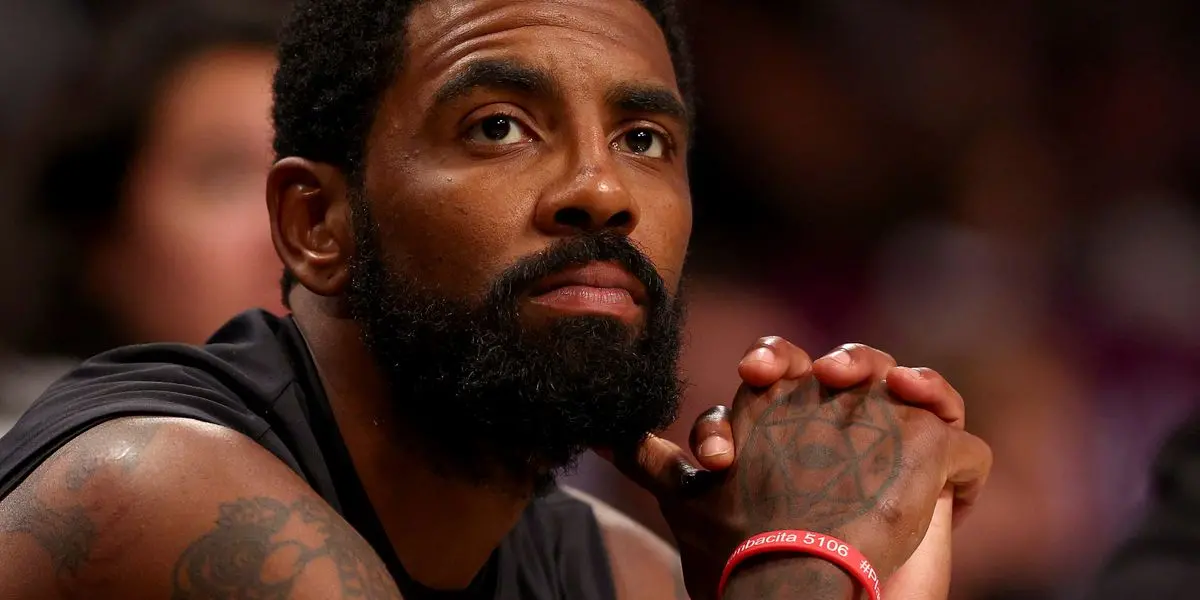
Brooklyn Nets superstar Kyrie Irving has publicly addressed the backlash following his promotion of a film widely condemned as antisemitic. In a joint statement released on November 2, 2022, by Irving, the Nets organization, and the Anti-Defamation League (ADL), the 30-year-old point guard expressed remorse and pledged financial support to combat hate and intolerance.
The controversy erupted when Irving shared a link on Twitter to the film Hebrews to Negroes: Wake Up Black America. The movie, based on a book, has been criticized by media outlets and advocacy groups for promoting antisemitic tropes, as well as being racist, misogynistic, homophobic, and Islamophobic. Irving initially defended his post, claiming he meant no harm and respected all religions, but the backlash was swift and severe.
In the joint statement, Irving said: "I oppose all forms of hatred and oppression and stand strongly with communities that are marginalized and affected every day." He acknowledged the "negative impact" his post had on the Jewish community and accepted responsibility for his actions. As part of the resolution, Irving and the Nets will each donate $500,000 (approximately €511,000) to organizations dedicated to fighting hate and intolerance. The Nets' owner, Joe Tsai, had earlier condemned Irving's behavior, stating he was "disappointed that Kyrie appears to support a film based on a book full of antisemitic disinformation."
Historical Context and Irving's Pattern of Controversy
This is not the first time Kyrie Irving has been embroiled in controversy related to conspiracy theories. In the past, he has liked social media posts suggesting that satanic secret societies are behind COVID-19 vaccines. More recently, he shared a video from notorious conspiracy theorist Alex Jones, discussing the "New World Order" theory, which fantasizes about a totalitarian global government and alleges that viruses are a tool for establishing such a regime.
Irving's actions have drawn criticism from across the sports world and beyond. The NBA, which has a strict policy against hate speech, has faced pressure to discipline players who violate these standards. While the league did not suspend Irving, the donation agreement was seen as a compromise to address the issue without escalating it further.
The Role of Social Media in Athlete Activism
The incident highlights the broader challenge of athletes using social media to amplify controversial or unverified content. With millions of followers, stars like Irving have significant influence, and their posts can quickly spread misinformation. The ADL, which helped broker the deal, emphasized the importance of education and accountability. In the joint statement, the organization noted that Irving would also engage in a dialogue with Jewish leaders and undergo training on antisemitism.
The Nets organization, which initially distanced itself from Irving's views, reiterated its zero-tolerance policy for hate speech. "The Brooklyn Nets strongly condemn any form of hate speech and have zero tolerance for any form of promotion of it," the team had stated earlier. This incident occurred just months after another high-profile antisemitism controversy involving rapper Kanye West, who was dropped by multiple brands after making antisemitic remarks. The timing put additional scrutiny on Irving and the NBA's response.
Impact on the NBA and Sponsorship
Financial repercussions for players often follow such controversies. Sponsors may reassess their relationships with athletes who engage in hate speech. Irving, who is known for his outspokenness on social and political issues, has previously faced criticism for his vaccination stance, which caused him to miss games at the start of the 2021-2022 season. The $500,000 donation, while significant, may not fully repair his reputation, but it signals a willingness to change.
The NBA as a whole has been proactive in promoting social justice, supporting initiatives like the league's foundation and player-led community programs. However, incidents like Irving's test the boundaries of free speech within the league's code of conduct. Critics argue that more severe penalties, such as suspension or fines, are necessary to deter future offenses. Supporters of Irving point to his right to explore controversial topics, but the consensus among basketball fans and commentators is that hate speech has no place in the sport.
Expanded Background on Kyrie Irving's Career
Kyrie Irving was drafted first overall by the Cleveland Cavaliers in 2011. He quickly established himself as one of the most talented point guards in the league, known for his exceptional ball-handling and scoring ability. He won the NBA Rookie of the Year award in 2012 and later helped the Cavaliers win the NBA championship in 2016, hitting a iconic three-pointer in Game 7 of the Finals. After a stint with the Boston Celtics, he joined the Brooklyn Nets in 2019 alongside Kevin Durant and James Harden, forming a star-studded trio.
Off the court, Irving has been an advocate for various causes, including indigenous rights, racial justice, and education. He has also been a vocal proponent of flat-earth theories, which he later walked back. His relationship with the media and the NBA has often been strained due to his unconventional beliefs and occasional refusal to participate in media scrums. Despite his talent, these controversies have sometimes overshadowed his on-court achievements.
The Broader Issue of Antisemitism in Sports
The Kyrie Irving case is part of a larger conversation about antisemitism in professional sports. Historical instances include Nazi salutes by players, use of Nazi symbols, and discriminatory comments. In recent years, soccer in Europe has seen a resurgence of antisemitic chants from fans. In the United States, Jewish players and officials have reported instances of bias and harassment. The ADL has worked with leagues like the NBA to implement training and reporting mechanisms.
The Nets' co-owner, Joe Tsai, who is of Chinese descent, also faced criticism for his handling of the situation. Some argued that his statement lacked clarity on the specific harm of antisemitic content. However, Tsai's condemnation was seen as a necessary step in holding Irving accountable. The joint statement with the ADL aimed to provide a path forward, focusing on education and reconciliation.
Reactions from Fellow Players and Coaches
Several NBA players and coaches weighed in on the controversy. LeBron James, a close friend and former teammate of Irving, initially declined to comment directly but later expressed support for dealing with the matter internally. Nets head coach Steve Nash stated that the team was focused on moving forward and that Irving understood the severity of the situation. Other players, like Milwaukee Bucks star Giannis Antetokounmpo, emphasized the importance of listening and learning.
The incident also sparked debate about the role of athletes as role models. While some argue that athletes should not be held to a higher standard, others point out that they have a platform that can be used responsibly. Irving's case illustrates the fine line between expressing controversial opinions and promoting harmful stereotypes.
Looking Ahead: Irving's Future with the Nets
As of the time of this writing, Kyrie Irving continues to play for the Brooklyn Nets, though his future with the team remains uncertain. The Nets are contending for an NBA championship, and Irving's performance on the court is critical to their success. The team hopes that this resolution will allow them to focus on basketball. Irving himself has stated that he is committed to learning and growing from this experience.
The donation of $500,000 to anti-hate organizations will support programs that educate about antisemitism and bigotry. The ADL will work with Irving to develop educational content for his social media channels. While this may not erase the damage caused by his initial post, it represents a concrete step toward accountability.
In conclusion, the Kyrie Irving antisemitism controversy serves as a reminder of the power and responsibility that come with celebrity in the digital age. Professional sports leagues continue to grapple with how to address hate speech while respecting free expression. The outcome of this case—a joint statement, financial contributions, and a commitment to education—sets a precedent for handling similar incidents in the future. Whether it will effectively deter other players remains to be seen, but it underscores the NBA's expectation that its players uphold values of respect and inclusivity.
Source: Spiegel News