

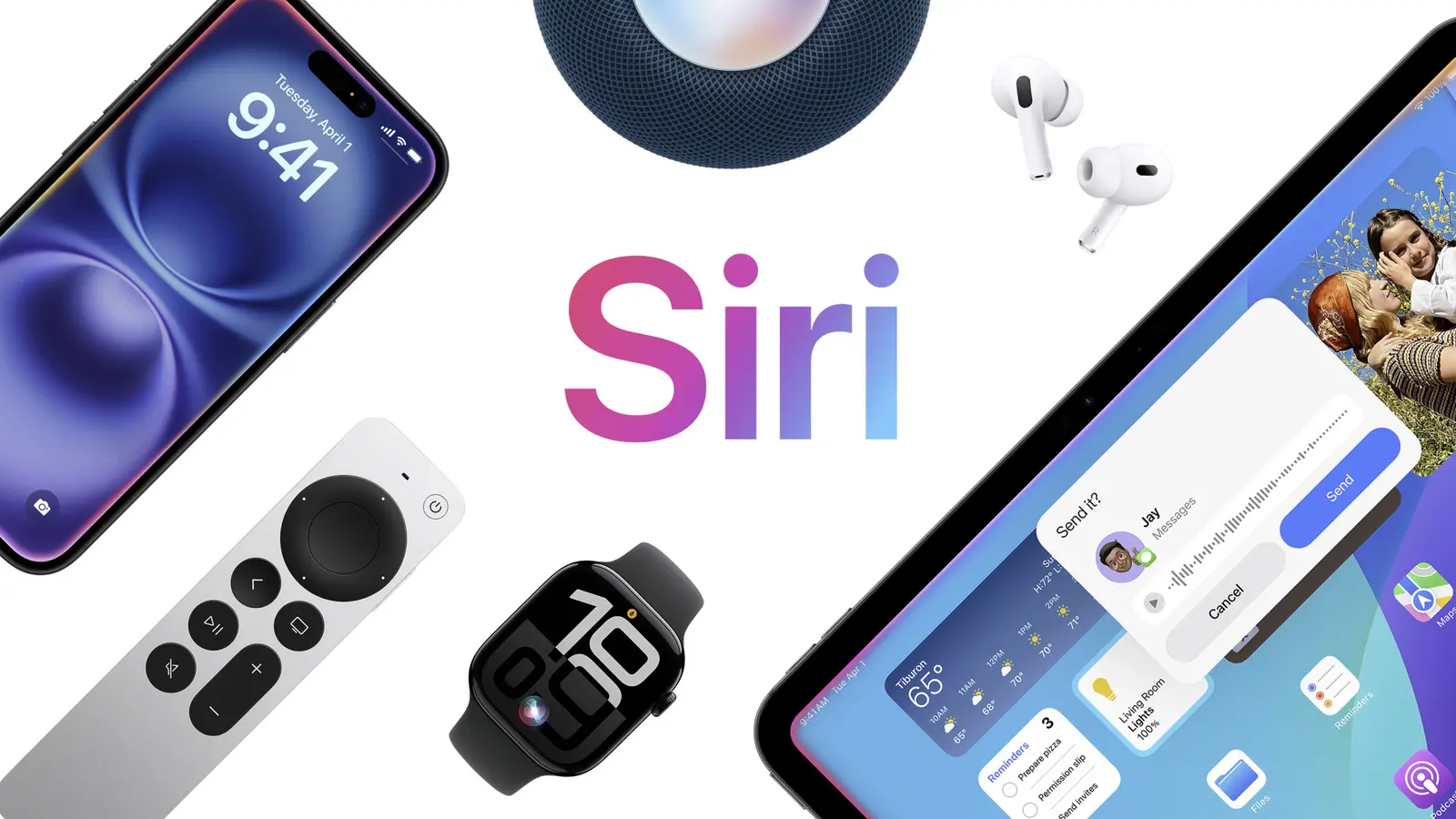
Apple has agreed to pay $250 million to settle a class action lawsuit alleging the company misled iPhone buyers in the United States by advertising a next-generation Siri assistant that never arrived on time. The lawsuit, filed shortly after Apple's WWDC 2024 keynote, centered on claims that Apple knowingly promoted a set of advanced AI features for Siri – including the ability to understand personal context, take actions within third-party apps, and provide more natural conversational responses – while having no concrete timeline for delivery. The settlement, pending approval by a federal judge, covers all purchasers of the iPhone 16 lineup and iPhone 15 Pro models in the US.
The original promise, unveiled at WWDC in June 2024, positioned Siri as a cornerstone of Apple Intelligence, the company's flagship AI initiative. Apple demonstrated a version of Siri that could look at a user's calendar, messages, and emails to answer complex questions like "When does my mom's flight land?" and automatically send replies. The demos impressed analysts and consumers alike, fueling expectations that the iPhone 16, launched in September 2025, would be the first device to truly harness on-device AI. However, by the time the iPhone 16 reached customers, only a fraction of the promised Apple Intelligence features were available, and the new Siri was notably absent.
Apple slowly rolled out components of Apple Intelligence throughout 2024 and 2025. Users received text rewriting tools, image generation capabilities, a clean-up tool for photos, and integration with OpenAI's ChatGPT for complex queries. But the centerpiece – a Siri that understands the user's context and can perform actions across apps – never materialized. Apple did not publicly acknowledge the delay until March 2025, more than five months after the iPhone 16 launched. In that acknowledgment, the company blamed the complexity of implementing large language models on-device while preserving user privacy, a core Apple value. It also cited challenges in integrating the Siri infrastructure with Apple's own privacy-focused silicon.
As part of the settlement, Apple has agreed to pay $250 million into a fund to compensate affected consumers. The class includes anyone who purchased an iPhone 16, iPhone 16 Plus, iPhone 16 Pro, or iPhone 16 Pro Max, as well as any iPhone 15 Pro or iPhone 15 Pro Max, in the United States between the September 2025 launch date and the date of the settlement's preliminary approval (expected in summer 2026). Each eligible consumer may receive a payment of approximately $25 to $50, depending on the number of claims filed, though Apple has not disclosed the exact per-claim amount. Importantly, Apple does not admit any wrongdoing or liability. The company maintains that its advertising was aspirational and that technical delays are common in the fast-moving AI industry.
The lawsuit, originally filed in the Northern District of California, was consolidated from several similar complaints. The plaintiffs argued that Apple's marketing materials – including TV commercials, website copy, and in-store signage – created a binding expectation that the new Siri would ship with the iPhone 16. They pointed to a specific ad that ran during the 2024 NFL season showing a woman asking her iPhone, "What time is my doctor's appointment?" and Siri responding with the correct answer after scanning her calendar. Apple pulled that ad in March 2025 after admitting the delay. The plaintiffs also noted that Apple never updated its product pages to remove the Siri claims until months after the iPhone 16 launch, continuing to imply the feature was imminent.
Behind the scenes, Apple's failure to ship AI Siri has been tied to internal reorganizations at the company. According to reports, the Siri team struggled to meet performance benchmarks for on-device large language model inference. Apple aimed to run the model entirely on the iPhone's neural engine, avoiding server-side processing to protect user privacy. But early tests showed response times that were unacceptably slow. Engineers also faced difficulties with accuracy in understanding context, especially when users had complex lives with overlapping calendars and multiple email accounts. Apple eventually decided to partner with Google's Gemini models for the new Siri, a move that surprised many analysts given Apple's usual preference for in-house technology. The partnership, announced quietly in early 2026, will allow Siri to offload some requests to Google's cloud for better accuracy, though Apple emphasizes that certain user data will remain on-device using differential privacy techniques.
The new Siri, now expected to launch in fall 2026 with iOS 27, will reportedly include the long-promised contextual features. In addition to the Google Gemini integration, Apple has been working on a new Siri architecture that uses a hybrid approach: simple, privacy-sensitive queries are handled on-device, while more complex or ambiguous requests are sent to the cloud with user consent. The company also plans to introduce a new Siri interface that shows an animated glowing orb, similar to the one introduced in iOS 18.4 but with more fluid animation and real-time feedback. Third-party developers are said to be excited about a new SiriKit extension that will allow apps to register intents that Siri can execute, opening up possibilities like booking rides, ordering food, or controlling smart home devices directly through voice.
The $250 million settlement is a significant financial blow to Apple but represents only a small fraction of its cash reserves, which stood at over $60 billion at last count. Analysts note that the settlement might have been larger had the case proceeded to trial, where Apple could have been forced to disclose internal emails and product roadmaps. By settling, Apple avoids the public scrutiny of its AI development missteps. The company also continues to face other legal challenges related to Apple Intelligence, including a class action in Europe over similar claims, though European regulations make those cases distinct. Additionally, Apple faces scrutiny from the US Federal Trade Commission regarding its marketing practices for AI features, though no formal investigation has been announced.
Industry observers see the Siri delay as a rare failure for Apple, which has built a reputation for delivering polished products on time. The company's foray into generative AI has been bumpy compared to rivals like Google and Microsoft, who have integrated AI assistants into their ecosystems more aggressively. Google's Gemini assistant is already available on Android devices, while Microsoft's Copilot is embedded in Windows, Office, and Edge. Apple's cautious, privacy-first approach has slowed its roadmap, but the company argues that it is building a more trustworthy AI platform that will win in the long run. The partnership with Google, while somewhat humbling, may give Apple the technical boost it needs to finally ship a Siri that lives up to the 2024 promises.
In the meantime, consumers who purchased iPhone 16 or iPhone 15 Pro models expecting the new Siri must wait until at least September 2026. They can file a claim for a small cash payment under the class settlement, but many are more disappointed about the missing functionality than the monetary compensation. Apple has a dedicated website for the settlement, where affected users can submit their proof of purchase. The deadline to file claims will be approximately 90 days after the court grants preliminary approval, likely in early 2027. Apple has also committed to continuing to improve Siri even after the feature ships, with future updates planned to add support for more languages, additional third-party actions, and deeper integration with Apple's health and fitness features.
The broader context of this settlement highlights the intense pressure on tech giants to deliver on AI hype. Apple, in particular, has been criticized for being slow to market with generative AI, even as its competitors launched products. The company's investor calls have frequently included questions about Apple Intelligence monetization, and the Siri failure has contributed to a slight dip in iPhone 16 sales, especially among early adopters. However, Apple's brand loyalty remains strong, and many consumers are willing to wait for the official release. The upcoming iOS 27, expected to be previewed at WWDC 2026, will likely be a major focus for the company, showcasing not just Siri but also other AI-driven features like enhanced Spotlight search, smarter notifications, and proactive Siri suggestions based on user habits.
Key facts from the settlement include: the total payout is $250 million; the class includes US buyers of iPhone 16, iPhone 16 Plus, iPhone 16 Pro, iPhone 16 Pro Max, iPhone 15 Pro, and iPhone 15 Pro Max; Apple admits no wrongdoing; the new Siri is now expected in iOS 27, using Google Gemini; and affected consumers can claim a small monetary payment. The article also notes that Apple pulled advertisements promising the feature in March 2025 and that the lawsuit was initially filed shortly after WWDC 2024.
Source: Engadget News