

Key Facts
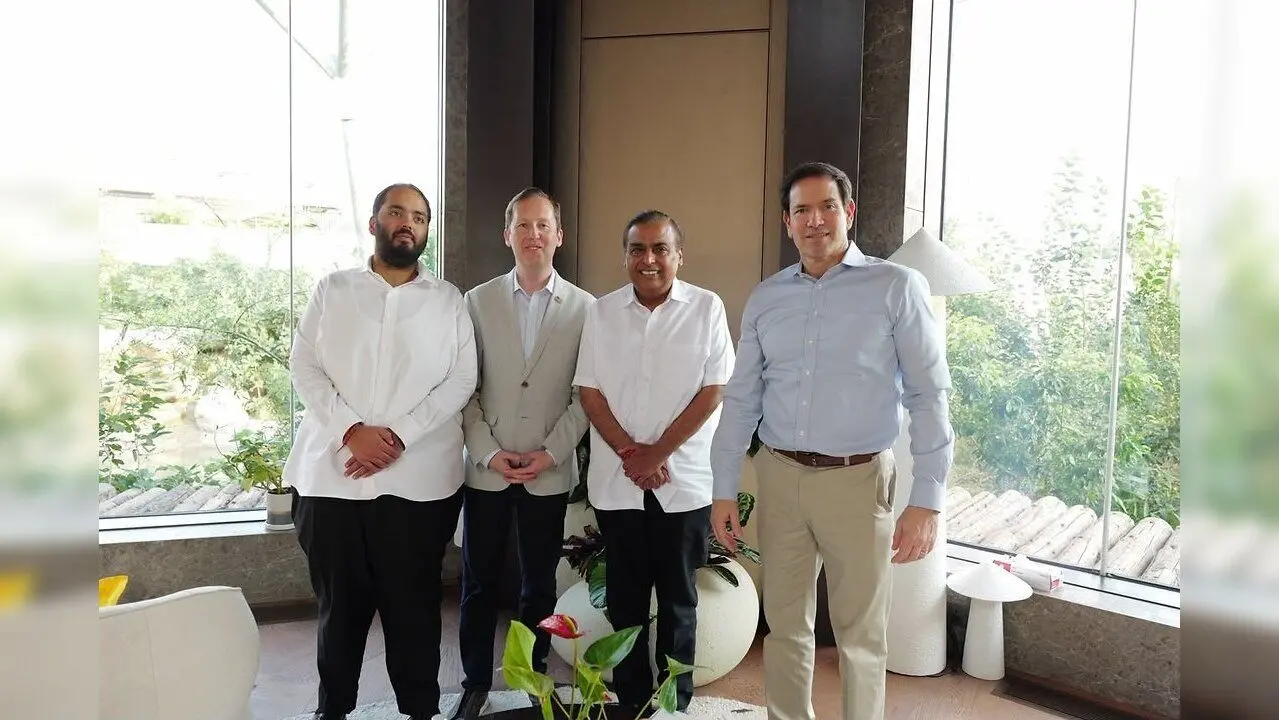
- US Secretary of State Marco Rubio met Reliance Industries Chairman and Managing Director Mukesh Ambani in Jamnagar, Gujarat, on Wednesday.
- The discussions focused on potential commercial partnerships across conventional energy, new energy, digital infrastructure and advanced manufacturing.
- Mukesh Ambani and his son, Reliance Industries Executive Director Anant Ambani, gave Rubio and US Ambassador to India Sergio Gor a tour of the refinery complex.
- Jamnagar is home to the world’s largest single-site refinery, operated by Reliance Industries.
- The exchange covered reliable and affordable energy supplies, technological advances, resilient supply chains and investment needed to meet growing demand.
- Reliance outlined its New Energy giga-factories, which are being commissioned in phases, and data centres under construction.
- The two sides explored opportunities for collaboration with US companies in technology, engineering and advanced manufacturing.
US Secretary of State Marco Rubio and Reliance Industries Chairman and Managing Director Mukesh Ambani held wide-ranging discussions in Jamnagar, Gujarat, on Wednesday on potential commercial partnerships, according to company statements. The meeting brought together a senior US official and one of India’s leading industrialists at a site that occupies a central place in the global energy map.
Jamnagar is home to the world’s largest single-site refinery, operated by Reliance Industries. The complex has become a symbol of large-scale refining capacity and integrated energy operations, and it is increasingly associated with the company’s plans for new energy, digital infrastructure and advanced manufacturing. The visit therefore offered a backdrop for discussions that went beyond a single refinery and touched on the wider commercial relationship between the United States and India.
Why Jamnagar Matters
The Jamnagar complex is located in Gujarat and has long been central to Reliance Industries’ energy business. It combines refining with petrochemicals and related infrastructure, allowing the company to process crude oil and produce fuels and chemical feedstocks at a large scale. Its scale, integration and export orientation have made it a significant node in global energy flows, and the site is often cited as an example of advanced industrial planning in India.
For the visiting US delegation, the refinery provided a practical view of how energy infrastructure operates at scale. It also offered a starting point for discussions about the equipment, technology, services and investment that support modern energy systems. Those issues are relevant to commercial partnerships because large energy complexes require continuous upgrades, efficiency improvements and supply-chain coordination.
Energy Security and Affordability
The discussions covered reliable and affordable energy supplies, technological advances, resilient supply chains and the investment required to meet growing demand. Those themes are central to the global energy debate as economies seek to secure supplies while managing costs for consumers and industries. Energy security is no longer only about access to fuel; it also involves diversified supply chains, dependable logistics and the ability to absorb market shocks.
Affordability remains an equally important consideration. Governments and companies are under pressure to keep energy costs manageable while funding the transition to cleaner sources. The exchange in Jamnagar reflected that balancing act, with attention to conventional energy and new energy in the same conversation. The presence of both topics underlined the practical approach needed to meet current demand while preparing for future energy systems.
New Energy and Digital Infrastructure
Reliance said Secretary Rubio and Ambassador Gor were briefed on Reliance’s New Energy giga-factories, which are currently being commissioned in phases, and the data centres under construction. The tour provided an overview of the company’s investments across energy and digital infrastructure, bringing together its advanced manufacturing and deep-tech capabilities.
The New Energy giga-factories represent a move toward large-scale manufacturing in the clean energy supply chain. Such facilities are intended to support the production of components and systems needed for the energy transition, and they require engineering depth, process discipline and capital investment. The phased commissioning described by the company suggests a staged approach to building industrial capacity and integrating it with existing operations.
The data centres under construction highlight another dimension of the company’s investment strategy. Data centres are energy-intensive facilities that require reliable power, cooling and connectivity. As demand for cloud services, artificial intelligence and digital platforms grows, the availability of dependable electricity becomes a competitive factor for digital infrastructure. The discussion of data centres alongside energy projects showed how power and digital economy planning are increasingly linked.
Advanced Manufacturing and Deep-Tech Vision
Mukesh Ambani and Anant Ambani outlined Reliance’s long-term vision for the Jamnagar complex and its development as a centre for deep-tech, innovation and advanced manufacturing. That vision extends the site’s identity beyond refining and petrochemicals into a broader industrial and technology platform.
Advanced manufacturing and deep-tech require more than large facilities. They depend on research and development, skilled engineering talent, process innovation and collaboration with technology partners. By positioning Jamnagar as a centre for these capabilities, the company is seeking to connect its existing industrial base with newer areas such as new energy systems, digital infrastructure and high-value manufacturing.
The tour provided an overview of the company’s investments across energy and digital infrastructure, bringing together well-established advanced manufacturing and deep-tech capabilities. For the visiting delegation, the site offered a view of how large industrial complexes can host multiple technology streams and support supply chains that extend beyond national borders.
Collaboration Opportunities with US Companies
Mukesh Ambani and Anant Ambani shared their perspectives on opportunities for collaboration with US companies, drawing on complementary strengths in technology, engineering and advanced manufacturing. The interaction provided a constructive opportunity to exchange industry perspectives and explore areas of mutual commercial interest.
The discussions also explored the increasing intersection of energy and digital infrastructure, including the role of dependable power in supporting data centres and the expansion of the digital economy. That intersection creates room for partnerships in power equipment, energy management, cooling systems, digital platforms and engineering services. It also points to the need for integrated planning, because digital growth can place new demands on electricity systems.
Commercial partnerships between Indian and US companies can draw on complementary capabilities. US firms bring strengths in technology, engineering, equipment and project management, while Indian companies offer large-scale operations, manufacturing capacity and experience in executing complex projects. The Jamnagar discussions focused on those complementarities without announcing specific agreements.
The visit included wide-ranging discussions on the global energy landscape and opportunities for commercial partnerships across conventional and new energy. The exchange covered reliable and affordable energy supplies, technological advances, resilient supply chains and the investment required to meet growing demand. It also reflected the broader importance of commercial diplomacy in strengthening economic ties between the two countries.
Reliance Industries said the visit included discussions on the global energy landscape and opportunities for commercial partnerships across conventional and new energy. The exchange covered reliable and affordable energy supplies, technological advances, resilient supply chains and the investment required to meet growing demand. Those subjects are likely to remain central as energy companies and governments plan for a period of sustained investment in infrastructure and technology.
Source: TimesNow News