

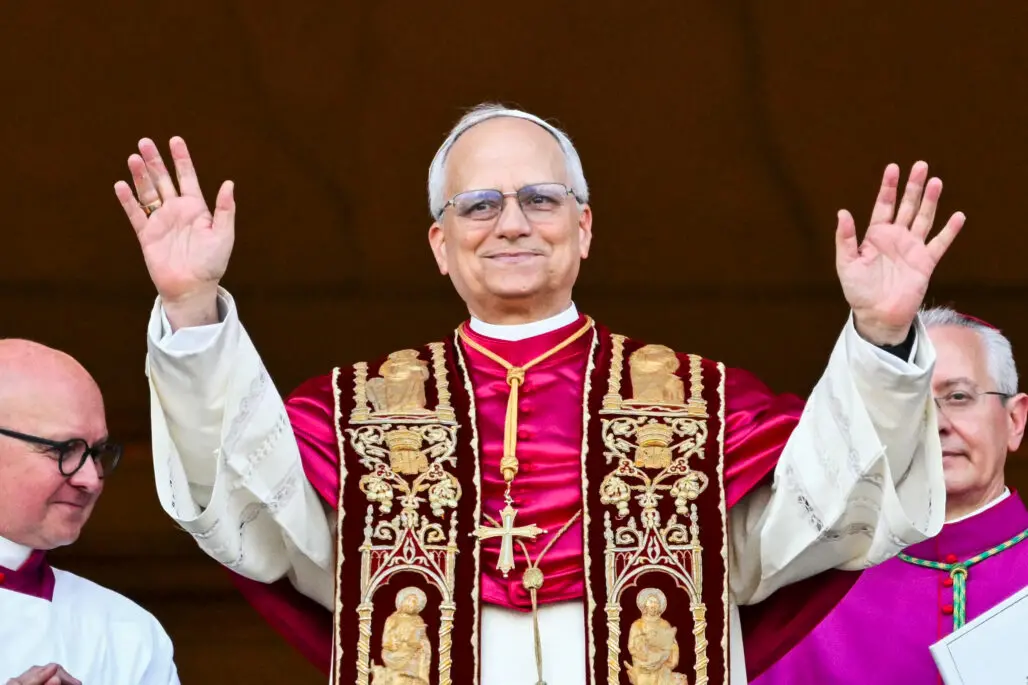
Key Facts at a Glance
- Pope Leo XIV is facing online backlash after a short video appeared to show him turning away from a Black clergyman during a greeting line in Metz, France.
- The footage was recorded in September at Saint-Étienne Cathedral.
- In the short clip, the pope shakes hands along a line and then turns away just before reaching the Black clergyman.
- Critics accused him of racial bias; supporters noted longer footage showing an aide directing him toward French officials, including President Emmanuel Macron.
- The pope's maternal ancestry has been discussed; historical records identified his maternal grandparents as Black or mulatto.
- Earlier in the visit, the pope spoke about equality regardless of race, color, class, or profession.
- The Vatican has not publicly commented on the controversy.
Pope Leo XIV is confronting a firestorm of criticism after a brief video from his recent apostolic visit to France appeared to show him abruptly turning away from a Black clergyman during a formal greeting line. The clip, recorded in September at Saint-Étienne Cathedral in Metz, spread quickly across social media, where some viewers interpreted the moment as a deliberate act of racial avoidance. The backlash has renewed broader conversations about race, perception, and the power of short-form video to shape public judgment.
In the widely shared clip, the pope moves along a line of people, shaking hands and exchanging brief words. After greeting several individuals, he reaches a point just before a Black clergyman and then turns away. The cut makes it appear as though the pope intentionally skipped the man. That impression triggered immediate accusations of racism.
One commenter wrote, “Can't imagine claiming to believe in any form of religion and still operate in hate — people are unwell.” Another said, “People who don't even see you as humans will never show you the way to their paradise.” Others invoked the history of slavery and racism, with one user writing, “They used to enslave us…. They literally wrote a code for it.” The reactions reflected how quickly a single frame can become evidence of deeper prejudice.
But the viral clip did not tell the whole story. Longer footage of the encounter appears to show that the pope was not deliberately avoiding the clergyman. According to reports, Archbishop Diego Ravelli, the Master of Pontifical Liturgical Celebrations, approached the pope just before he changed direction. Ravelli appeared to direct Leo toward French officials, including President Emmanuel Macron. In that context, the pope's turn away from the line seems to have been a redirect rather than a refusal to greet the Black clergyman.
Social media users who watched the longer footage pushed back against the racism accusations. “A video is circulating on X that looks like Pope Leo XIV refused to shake a Black priest's hand and walked away,” one user wrote. They later added that the pope had greeted other Black people earlier in the same line and that an assistant appeared to alert him that a French official was present. Another commenter concluded, “I think he was interrupted and he was talking.” A third user, while expressing no support for the pope, dismissed the accusation as an overreaction: “I don't even f–k with this pope! But this is clearly a reach he was clearly distracted at that very moment, as u can see.”
The controversy has been amplified by the pope's own racial ancestry. Leo XIV, born Robert Francis Prevost, has maternal roots that have been described as both Black and Haitian. Historical census records examined by media outlets identified the pope's maternal grandparents, Joseph Martinez and Louise Baquié, as Black or “mulatto.” The couple lived in New Orleans before moving to Chicago, and Martinez's records connect his family to Louisiana and Haiti. A genealogist told reporters that the pope has centuries-long ties to free people of color in Louisiana. Records from 1900 identified both of Leo's maternal grandparents and two of their daughters as Black while the family lived in New Orleans.
That background has made the racism allegations more complicated for some observers. One commenter defended the pope by pointing to his ancestry: “Leave him alone!!! He is literally part Black and specifically of Haitian descent and said it himself!! He also has roots in Chicago. Y'all are extremely reaching with this.” The exchange illustrates how personal history, public perception, and viral media can collide in unpredictable ways.
The timing of the controversy has also drawn attention because of what the pope said earlier during the same visit. While in Metz, Leo called on Europe to promote equality regardless of “race, color, class or profession” and encouraged greater respect for migrants. During Mass at Saint-Étienne Cathedral, he said Europe's future “does not lie in uniformity, but in the harmony of differences.” Those remarks added another layer to the criticism, as users compared his message of inclusion with the brief interaction shown in the viral video. For critics, the clip seemed to contradict his words. For defenders, the longer footage showed that the contradiction was manufactured by a decontextualized edit.
The Vatican has not publicly addressed the social media controversy, and the pope has not responded directly to the accusations. That silence has allowed the debate to continue without an official explanation, leaving social media users to argue over what the footage really shows. The episode has become a case study in how quickly a short video can shape global perceptions, especially when race is involved.
Pope Leo XIV was elected in 2025, becoming the first American to lead the Roman Catholic Church and the first Augustinian pope. Born in Chicago, he spent years as a missionary and bishop in Peru before serving as prefect of the Dicastery for Bishops. His background as a pastor with experience in both North and South America has shaped his public emphasis on migration, inequality, and dialogue. His visit to France was part of a broader effort to engage with European leaders and Catholic communities. The greeting line in Metz was a routine part of a papal visit, but in the age of social media, even routine moments can become flashpoints.
The viral clip raises familiar questions about context collapse. A short video can strip away the cues that explain a person's behavior: who else was in the room, what was said, where an aide was standing, what came immediately before and after. Viewers see a gesture and infer intent. When the subject is race, those inferences can carry enormous weight. In this case, the longer footage suggests that the pope was responding to a liturgical official's signal, not making a racial choice. Yet the shorter clip continues to circulate because it fits a recognizable narrative about racism and exclusion.
For the Black clergyman at the center of the moment, the experience may be more complex. He has not been publicly identified in most accounts, and it is unclear whether he has commented on the controversy. The viral clip turned him into a symbol before he could speak for himself. That is another feature of modern media: a person can become the subject of a global debate without ever choosing to enter it.
The pope's defenders argue that the accusation is unfair because he has repeatedly spoken out against racism and inequality. They point to his ancestry, his pastoral record, and his public statements. Critics argue that even if this particular moment was misinterpreted, the incident highlights the importance of being attentive to racial dynamics. Both sides seem to agree on one thing: the clip alone does not provide enough evidence to determine what the pope was thinking.
What is clear is that the controversy has become another example of how social media can turn a few seconds of footage into a global story. The pope's visit to France was intended to focus on faith, unity, and European values. Instead, a brief greeting line at Saint-Étienne Cathedral has become a referendum on race, perception, and the limits of viral evidence. The Vatican has not issued a statement, and the debate shows no sign of fading.
Source: Atlanta Black Star News