

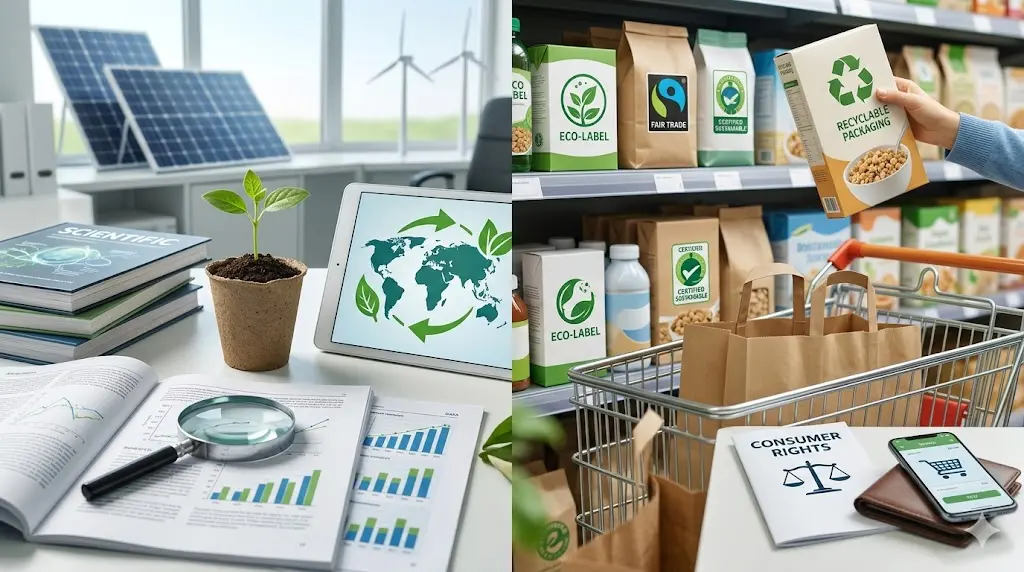
Sustainability and consumer rights research findings show a pretty uncomfortable truth: most people want ethical products, but the systems they rely on don’t always make that easy. You’re constantly asked to choose “green” options, yet the information behind those claims is often unclear or inconsistent. What researchers are finding in 2026 is that consumer protection and sustainability are now deeply connected, not separate issues.
Here’s the simple answer: when consumer rights are strong, sustainability claims become more trustworthy. When they’re weak, greenwashing spreads faster and buyers get misled without even realizing it.
Research on sustainability and consumer rights shows that transparency, regulation, and labeling accuracy directly affect ethical buying behavior. In 2026, the biggest shift is toward stricter accountability for environmental claims and stronger protections against misleading marketing in global supply chains.
Ethical Consumer Accountability
Ethical Consumer Accountability: A system where companies must clearly prove sustainability claims so consumers can make informed and fair purchasing decisions.
What Are Research Findings on Sustainability and Consumer Rights?
Let’s keep this simple. This research field looks at how consumer protection laws and sustainability efforts interact in real markets. It studies whether people are actually being given truthful information about how products are made, sourced, and delivered.
Here’s the thing—most consumers assume “eco-friendly” labels mean something concrete. But in many cases, those claims are loosely defined or even self-certified. Researchers are finding that this gap between perception and reality is where most problems start.
In my experience, people don’t ignore sustainability—they just don’t trust it fully. And honestly, that hesitation makes sense when labeling systems vary so much across industries and countries.
What most people overlook is that consumer rights are not just about refunds or returns anymore. They now include the right to environmental truth. That shift is still evolving, but it’s already reshaping policy discussions worldwide.
Why Sustainability and Consumer Rights Matter in 2026
2026 is a turning point year because sustainability marketing has exploded, but verification systems haven’t caught up everywhere.
Consumers are being asked to make ethical choices constantly. Recycled packaging, carbon-neutral shipping, cruelty-free sourcing—it’s everywhere. But the systems validating these claims are uneven.
Let me be direct: misinformation doesn’t always come from intentional deception. Sometimes it comes from vague standards that different companies interpret differently.
Another layer researchers are focusing on is digital shopping behavior. Online platforms amplify sustainability claims without always offering context. A product might look “green,” but the supply chain behind it might tell a different story.
From what I’ve seen in recent consumer behavior studies, younger buyers are more skeptical but also more overwhelmed. They want better choices, but too many labels create confusion instead of clarity.
How to Improve Sustainability and Consumer Rights Systems — Step by Step
If researchers or policymakers were trying to strengthen this space, here’s the kind of framework they often follow.
1. Standardize sustainability definitions
Without shared definitions, “eco-friendly” means nothing consistent across industries. This is where confusion begins.
2. Audit supply chain transparency
Companies need to track where materials come from, how workers are treated, and what environmental impact exists at each stage.
3. Strengthen labeling laws
Labels should be verifiable, not just marketing language. This step is where consumer rights and sustainability directly overlap.
4. Monitor digital marketplace claims
Online platforms need accountability systems that flag exaggerated or unclear environmental claims.
5. Educate consumers in practical ways
Not theory-heavy education, but simple ways to interpret labels and certifications without needing a degree in environmental science.
The Common Misconception About “Green” Products
A big misunderstanding is that sustainable products are always better in every way. That’s not always true.
Sometimes, a “green” product might have a lower environmental impact but worse durability, leading to more frequent replacements. That trade-off rarely gets explained clearly to consumers.
What researchers are pointing out is that sustainability isn’t a single metric—it’s a balance of multiple factors, including waste, labor conditions, and long-term usability.
Expert Tips: What Actually Works in Real Markets
Here’s my honest take: the biggest improvements don’t come from flashy sustainability campaigns. They come from boring but consistent transparency rules.
In my experience, when companies are forced to simplify their environmental claims, consumer trust increases almost immediately. Not because people suddenly believe everything—but because they finally understand what they’re buying.
Expert tip: The more specific a sustainability claim is, the more trustworthy it tends to be. Vague claims like “eco-conscious” usually signal weak verification behind the scenes.
Another thing most guides miss is that consumers don’t always want perfect products. They want honest trade-offs. If a company clearly says “this reduces water use but increases transport emissions,” people can actually make smarter decisions.
Here’s a slightly counterintuitive point: overloading products with certifications can reduce trust instead of increasing it. Too many badges create confusion, not confidence.
Real-World Case Studies in Sustainability and Consumer Rights
Let’s ground this in reality.
One case researchers often discuss involves a clothing brand that marketed itself as fully sustainable. On the surface, everything looked good—recycled materials, ethical sourcing claims, and low-impact packaging. But deeper audits revealed that only part of the supply chain met those standards.
The result wasn’t just reputational damage. Consumer trust dropped sharply, even for similar brands in the same category. That’s something people don’t always expect—trust spillover affects entire industries, not just one company.
Another example comes from the food sector. A company labeled its products as “carbon-neutral,” but the methodology behind that claim was unclear to consumers. After clearer labeling regulations were introduced, purchasing behavior actually stabilized, even though prices didn’t change.
From my perspective, that second case is important because it shows something simple: clarity often matters more than perfection.
Expert Insight: The Psychology Behind Ethical Buying
Consumers don’t behave as rational calculators. They react emotionally to trust signals.
When sustainability claims feel confusing or inconsistent, people default to price or convenience instead. That doesn’t mean they don’t care—it just means the system didn’t help them make a confident decision.
At least from what I’ve seen in behavioral studies, trust is the real currency in ethical consumption. Not awareness. Not intention. Trust.
That’s why consumer rights research is becoming more important than ever. It’s not just about protecting people financially—it’s about protecting their ability to make informed moral choices.
Unexpected Finding: Simpler Systems Outperform Complex Ones
Here’s something that surprises a lot of people.
Researchers found that simpler sustainability labeling systems often outperform highly detailed ones in real-world decision-making. People don’t use all available information—they use what they can quickly understand.
So when labels become too complex, decision quality actually drops.
That flips a common assumption on its head. More information doesn’t always mean better outcomes.
People Most Asked About Sustainability and Consumer Rights
Why are consumer rights important in sustainability research?
Consumer rights ensure that sustainability claims are accurate and verifiable. Without them, companies can exaggerate environmental benefits without accountability.
What is greenwashing in simple terms?
Greenwashing happens when companies present products as more environmentally friendly than they actually are. It often involves vague language or misleading labels.
How do consumers verify sustainability claims?
Consumers can look for standardized certifications, but researchers suggest relying more on transparent supply chain data and clearly explained environmental impacts.
Are sustainable products always better for the environment?
Not always. Some sustainable products reduce one type of impact while increasing another, such as lower emissions but higher resource use elsewhere.
Why is transparency so important in consumer rights?
Transparency allows buyers to understand trade-offs clearly. Without it, consumers may make decisions based on incomplete or misleading information.
If you’re aiming to increase visibility in sustainability, consumer rights, or ethical market research spaces, strategic publishing through press release distribution services and digital marketing services can significantly improve SEO ranking, organic traffic, and brand visibility. Our Network site provides guest posting services, PR distribution services, and link building services designed for businesses, startups, and agencies looking for high authority backlinks, media coverage, and instant publishing opportunities that strengthen long-term digital authority.