

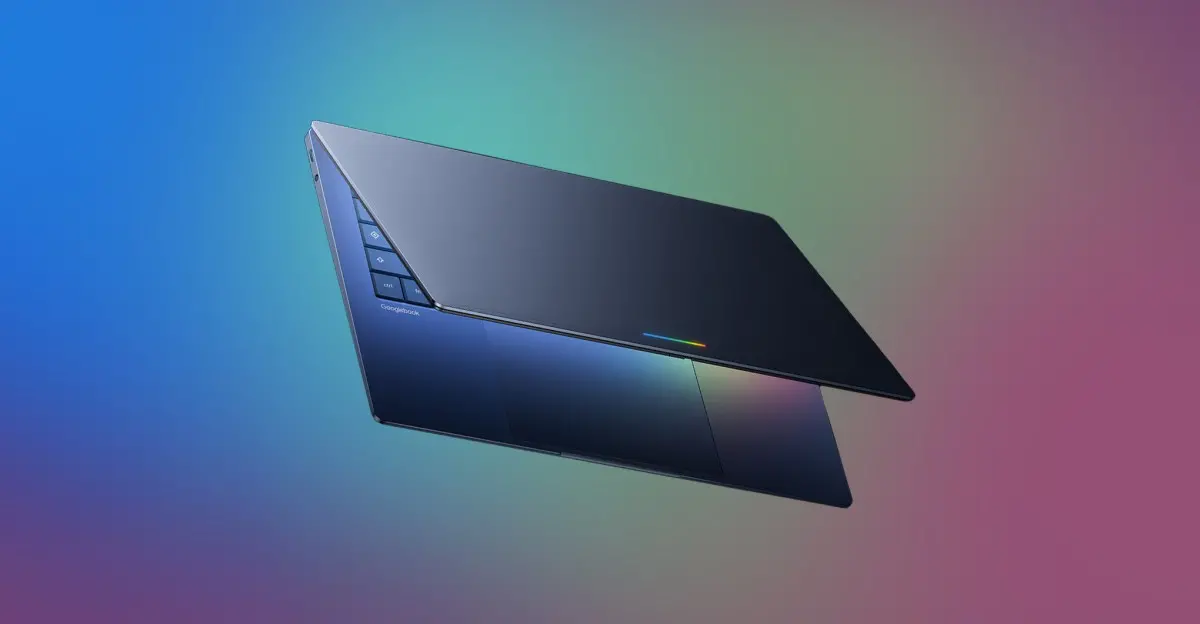
Google recently announced its new Googlebook laptop platform, a move that effectively replaces the long-running Chromebook line. The announcement, made on May 12, 2026, has sparked widespread confusion and skepticism among tech enthusiasts and industry analysts. The new line of laptops runs on an operating system built from the Android stack, rather than the ChromeOS that powered Chromebooks for nearly 15 years. But while Google touted features like deep Gemini AI integration and seamless phone pairing, it offered few specifics about hardware specifications, pricing, or target audience. The lack of clarity has led many to ask a simple question: Why does the Googlebook exist?
Background: The Rise and Stagnation of Chromebooks
Chromebooks debuted in 2011, offering a lightweight, web-focused operating system that could run on low-cost hardware. They quickly became popular in education, with schools assigning Chromebooks to students due to their low cost, security, and ease of management. Over time, ChromeOS gained support for Android apps, making it more versatile. However, in recent years, ChromeOS has faced stiff competition from Windows laptops and MacBooks, especially after Apple introduced the M-series chips and the sub-$600 MacBook Neo. Google's own efforts to revive ChromeOS have been sluggish, leading to speculation about a major overhaul.
The Googlebook Announcement: What We Know
During a virtual event, Google revealed the Googlebook as a new laptop platform. The operating system is based on Android, effectively unifying the company's mobile and desktop OS efforts under what was long rumored as "Aluminium OS." Key features include deep integration with Gemini, Google's AI assistant, which can generate widgets, create images from prompts, and even appear in the cursor. The laptops also feature a glowing light bar and are built in partnership with Intel. However, Google provided no details on minimum specs, chip options, or pricing. The company focused heavily on AI capabilities, showing demos of casting apps from a paired Android phone and AI-generated artwork. Critics noted that many of these features could have been added to ChromeOS without a full platform replacement.
Market Context: A Crowded and Competitive Landscape
The laptop market in 2026 is highly competitive. Apple's MacBook Neo has carved out a niche in the $600 price range, offering excellent performance and battery life. Windows on Arm has matured, with efficient processors from Qualcomm and others. Traditional x86 Windows laptops from Dell, HP, and Lenovo continue to improve, offering strong performance and long battery life. In this environment, Google must offer something truly unique to justify the Googlebook. But so far, the company has not demonstrated a clear advantage. The emphasis on Gemini AI raises concerns about forced AI integration, similar to backlash Microsoft faced with Copilot in Windows 11.
Reactions and Criticism
Industry analysts and journalists have been largely critical. Antonio G. Di Benedetto of The Verge wrote that the Googlebook "doesn't solve anything" and that Google "could have just made an app." He pointed out that Chromebooks already had Android app support for a decade, and that the new OS is still scaling a mobile ecosystem to desktop, a constraint competitors don't face. Social media users have coined the term "Google Slopbook" to mock the heavy AI focus. The lack of hardware details has also frustrated potential buyers who want to know what they're getting for their money.
Historical Parallels and Next Steps
Google has a history of struggling with hardware platforms. The Pixelbook, its premium Chromebook line, was discontinued after lukewarm sales. The company's phone efforts have been more successful, but laptops remain a challenge. The Googlebook represents a gamble that AI can differentiate a laptop in a crowded market. However, without clear advantages in performance, software ecosystem, or price, the Googlebook risks being seen as a solution in search of a problem.
Google has promised to share more details in the coming months. The company must address fundamental questions: Who is the Googlebook for? What problems does it solve that Chromebooks, MacBooks, or Windows laptops cannot? And why should consumers trust Google's AI-heavy approach when competitors are already offering similar features without overhauling their entire OS? The answers to these questions will determine whether the Googlebook becomes a hit or a footnote in tech history.
Source: The Verge News