

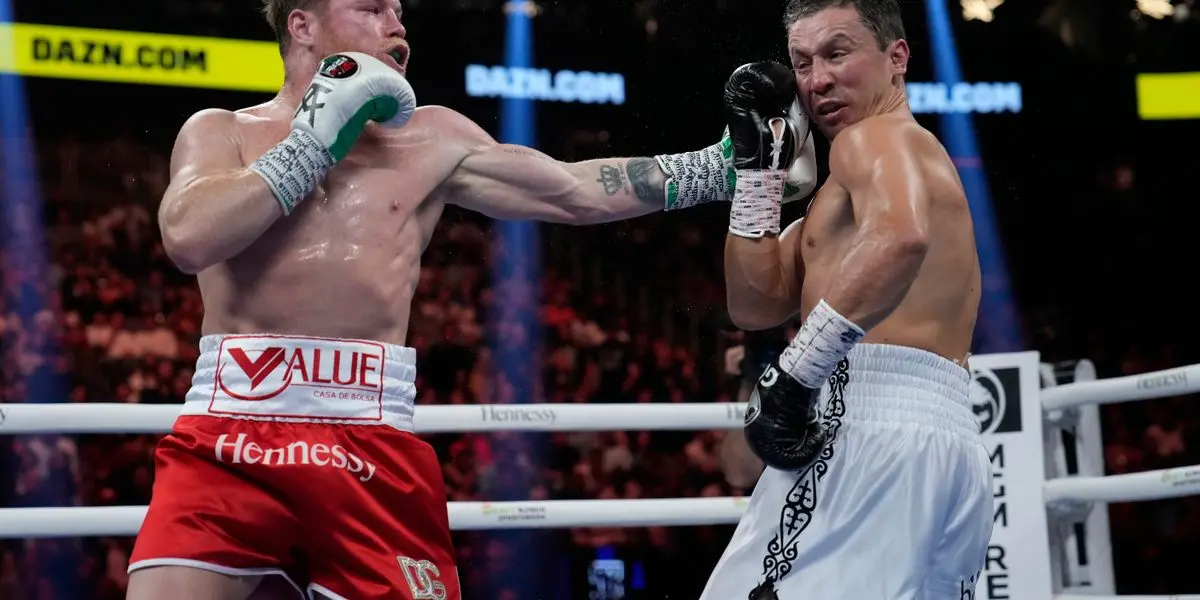
Boxing trilogies have long been a staple of the sport, etching the names of rivalries like Ali-Frazier, Holyfield-Bowe, and Leonard-Duran into history. In the early hours of Sunday, Saúl 'Canelo' Álvarez and Gennady 'GGG' Golovkin added their own chapter to that storied tradition, meeting for the third and likely final time in a highly anticipated showdown. However, unlike the epic wars of the past, this fight failed to deliver the fireworks many had hoped for. Instead, it was a tactical, often cautious affair that underscored the age and stylistic differences between the two men.
After twelve rounds of measured combat, Álvarez emerged victorious by unanimous decision, handing Golovkin just the second loss of his professional career. The judges' scores were 116-112, 115-113, and 115-113, all in favor of the Mexican superstar. The result was clearer than in their previous two meetings, leaving little room for controversy. Álvarez had previously won the first fight via a controversial split decision in 2018, following a draw in their initial 2017 encounter. This time, there was no debate about who deserved the win.
From the opening bell, Álvarez took control of the ring. He pressed forward from the center, landing sharp, clean punches with both his lead and rear hands. His movement and timing were impeccable, repeatedly catching Golovkin with precise combinations. The Kazakh struggled to find his rhythm in the early rounds. Swelling appeared on his face, evidence of the consistent punishment he was absorbing. At 40 years old, Golovkin's punches lacked the snap and speed that once made him one of the most feared punchers in the sport. His shots were too slow, too predictable, and often fell short of their target.
Álvarez, eight years younger, showcased the physical advantages that now separate the two. He was stronger, faster, and more versatile. His footwork allowed him to pivot out of danger, and his uppercuts and hooks troubled Golovkin whenever he attempted to close the distance. The Mexican's ability to mix body and head attacks kept Golovkin guessing, and by the midway point of the fight, it was clear that the champion was in command.
Golovkin's best moments came in the ninth round. He finally found some success, landing clean combinations and pushing Álvarez back. The Kazakh's trademark pressure seemed to rattle the Mexican momentarily, but Álvarez quickly adjusted, using his jab and lateral movement to reassert control. In the tenth round, the two fighters inadvertently clashed heads, opening a small cut on Álvarez's forehead. The wound bled slightly but had no significant impact on the fight's outcome. Golovkin's renewed aggression was too sporadic to overcome the early deficit.
The final round saw referee Russell Mora intervene multiple times, separating the clinching boxers. Both knew that Golovkin needed a knockdown or knockout to turn the tide. Álvarez expertly neutralized any dangerous exchanges, smothering Golovkin's attacks and tying him up when necessary. The champion's defensive instincts, honed over years of elite competition, ensured he would not be caught with a fight-ending blow.
After the final bell, the two rivals shared a moment of mutual respect. 'I thank Gennady Golovkin for three great fights,' Álvarez said in the ring. 'He is a very good boxer. I am proud to have shared the ring with him.' Golovkin, gracious in defeat, replied, 'He was better tonight. Everyone wants to fight Canelo. He is simply the best. I feel nothing but respect for him.'
The victory allows Álvarez to retain his undisputed super middleweight championship, holding all four major belts in the division (WBA, WBC, IBF, WBO). Despite this success, his primary goal remains a rematch with Russian light heavyweight titlist Dmitry Bivol. Bivol defeated Álvarez in May of this year, handing him a clear and decisive loss. 'Everyone knows I want to avenge that defeat,' Álvarez stated. 'But first I need a rest.' A potential return to 175 pounds would be one of the most challenging tasks of his career, given Bivol's size and technical prowess.
Golovkin's future is less certain but far from over. Prior to the fight, there was speculation that this could be his farewell bout. However, the Kazakh dismissed retirement talk. 'Of course I will come back,' he insisted. 'I am still a champion. I still have some big fights in me.' Golovkin moved up to super middleweight specifically for this trilogy, but he still holds the IBF and WBA middleweight titles (at 160 pounds). He can now return to his natural weight class to defend those belts. His legacy as a dominant middleweight champion remains intact, even if age has clearly eroded some of his abilities.
The Álvarez-Golovkin rivalry will be remembered as one of the defining feuds of the modern era. While their first two bouts were contested and controversial, this third meeting produced a decisive winner. For Álvarez, it was a statement performance, confirming his place at the top of the sport. For Golovkin, it was a valiant effort from a proud warrior who refused to go quietly. As both men move forward, the boxing world will watch with interest to see what challenges lie ahead for each of these extraordinary athletes.
Source: Spiegel News