

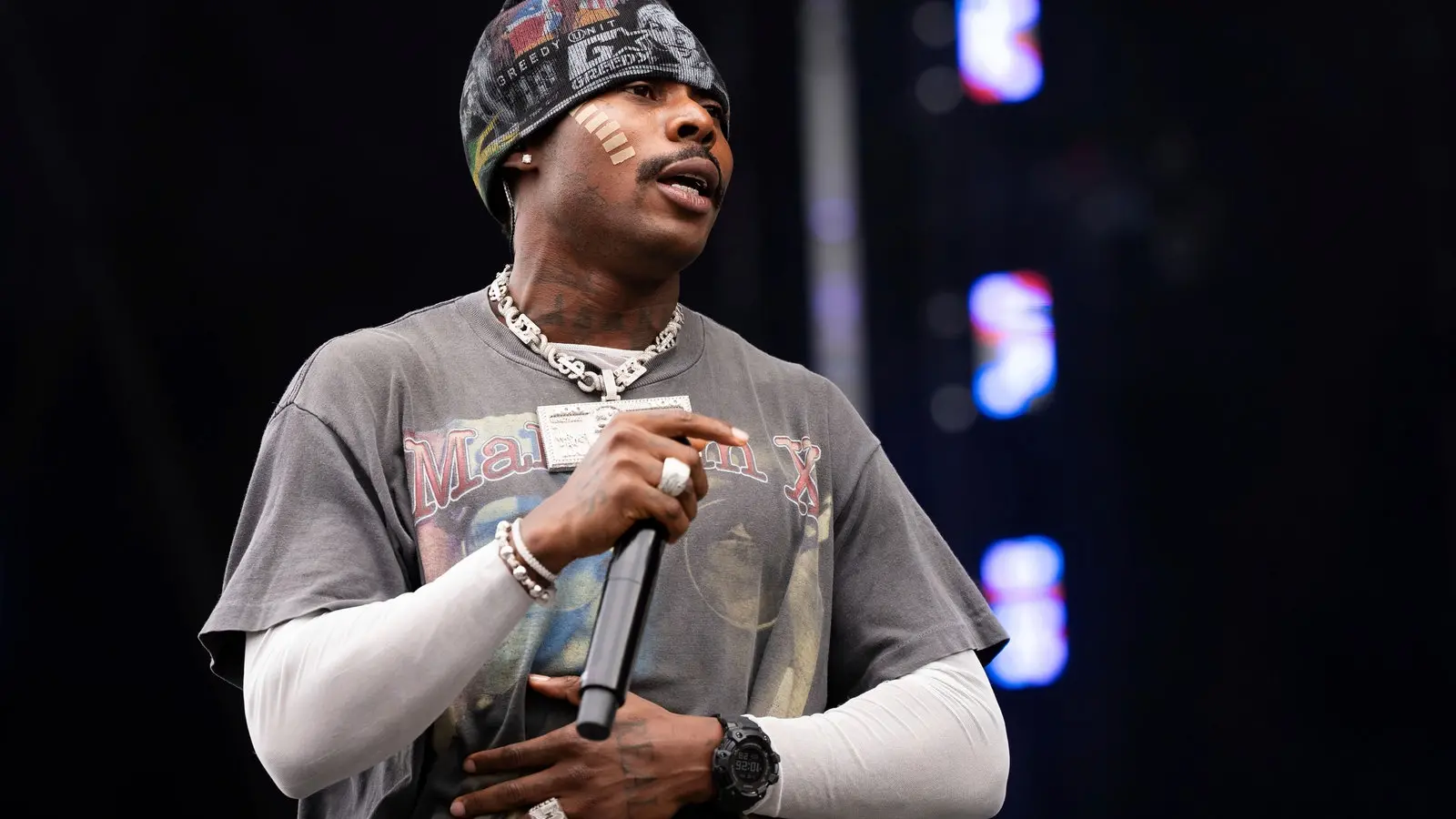
In the ever-evolving landscape of African popular music, few artists have captured the zeitgeist quite like Ahmed Ololade, better known as Asake. With his fourth studio album M$NEY, the Nigerian singer-producer delivers a work that is both a celebratory party record and a deeply spiritual meditation on success, faith, and the human condition. Released in May 2026, the album immediately reaffirms why Asake has become a global phenomenon, having earned a Grammy nomination, sold-out stadium shows, and a reputation for crafting irresistible melodies that merge traditional African elements with contemporary production.
Asake's journey to musical stardom is as fascinating as his music. Born in 1995 on Lagos Island, he was affectionately called 'Sohn von Asake' (son of Asake) by his schoolmates, adopting his mother's first name as his stage moniker. After moving to Ile Ife in southwestern Nigeria, he studied theatre and performing arts at Obafemi Awolowo University, a training that would later inform his charismatic stage presence and storytelling ability. His breakthrough came in 2020 with the viral hit 'Mr Money,' which not only topped charts but also gave him a second nickname that he proudly wears to this day. His debut album Mr. Money with the Vibe (2022) was a critical and commercial success, introducing a sound that deftly blended South African Amapiano rhythms with Nigerian street-pop and Fuji music influences. Tracks like 'Organise' became blueprints for his subsequent work: catchy call-and-response choruses, groovy piano chords, and a laid-back yet energetic delivery.
The Sound of 'M$NEY': A Fusion of Grooves
On M$NEY, Asake refines his signature formula while exploring new sonic territories. The album runs for just over 40 minutes, packed with 13 tracks that oscillate between uptempo party starters and slower, more reflective pieces. The production is largely helmed by his long-time collaborator Magicsticks, who also contributed to Asake's previous works. However, the album also features contributions from French electronic producer DJ Snake and South African Afrohouse maestro Kabza de Small, adding international flavors that never overshadow the core Nigerian essence.
The Amapiano influence is undeniable. Originating in South Africa, Amapiano—meaning 'the pianos' in Zulu—is characterized by melodic piano lines, deep bass, and log drum patterns. Asake has been a key figure in exporting this sound beyond Africa's borders. On tracks like the title song 'M$NEY' (with its dollar sign symbolism) and 'Good Vibes Only,' layers of jazzy keys and syncopated beats create an infectious groove that demands movement. Yet Asake is not merely a mimic; he weaves in elements of Fuji music, a traditional Yoruba genre that uses talking drums and call-and-response vocals. This fusion gives his music a distinct identity that sets him apart from other Afrobeats acts.
One of the album's standout features is its use of instrumental breaks. Instead of relying solely on vocals, Asake allows space for saxophone solos, guitar riffs, and even violin interludes to breathe life into the tracks. 'Oba (King)' features a bassline sampled from Bobby Caldwell's soul classic 'What You Won't Do for Love,' famously used by Tupac in 'Do for Love.' The nod to hip-hop history is subtle but powerful, showcasing Asake's deep musical knowledge. Meanwhile, 'Badman Gangsta' is a duet with French rapper-singer Takiola, blending trap-influenced Afrobeats drums with a smooth R&B vibe. The chemistry between the two artists is palpable, and the track stands as one of the album's most innovative moments.
Spirituality and Substance Beyond the Party
Despite its title, M$NEY is far from a superficial ode to wealth. Asake uses the concept of money as a gateway to explore deeper themes of purpose, gratitude, and spiritual fulfillment. The acronym 'MCBH' stands for 'Money Can't Buy Happiness,' a track that strips away the glamour and addresses the emptiness that can accompany material success. In 'Rora'—which translates roughly as 'wait' or 'careful'—he reflects on how generational wisdom shapes a child's upbringing, emphasizing the importance of community and family ties.
Perhaps the most striking aspect of the album is its openness about faith. Asake, a practicing Muslim, makes no secret of his devotion. 'Worship' sounds like a sung prayer, with lines like 'Praise be to God, no matter your condition' repeated over a gentle Amapiano beat. The song's arrangement is minimal, allowing his vocals to carry the emotional weight. 'Forgiveness' is equally direct, a plea to the divine for mercy and guidance. In a genre often dominated by secular themes of romance and partying, Asake's willingness to center his spirituality is refreshing and authentic. It also resonates with his Nigerian audience, where religion plays a central role in daily life.
This duality—party and prayer—is what makes M$NEY such a compelling listen. Asake proves that one can celebrate success while remaining grounded in faith and family. He is not preachy; rather, he integrates these concepts naturally into his lyrics, much like his contemporaries Burna Boy and Wizkid have done in the past.
Lyrical Depth and Cultural Relevance
Asake sings in English, Pidgin English, and Yoruba, a trilingual approach that reflects the cosmopolitan nature of modern Lagos. His wordplay is clever, often mixing street slang with proverbs. On 'Mr Money'—a reprise of his early hit—he boasts about his rise but also acknowledges the struggles that came with it: 'I've been through the storm, now I'm dancing in the rain.' Lines like these resonate with listeners who see their own aspirations mirrored in his story.
The album also touches on social issues. In 'Brother's Keeper,' he addresses the burden of success and the expectation to support extended family—a common reality for many African artists. The track features a poignant guitar melody that underscores its bittersweet message. Similarly, 'Too Many Voices' critiques the noise of social media and public opinion, urging listeners to focus on their own path. These moments of introspection elevate M$NEY beyond mere entertainment, positioning Asake as a thoughtful commentator on contemporary life.
Production and Collaborative Genius
The production value on M$NEY is top-notch. Magicsticks brings a polished yet organic feel, mixing live instrumentation with electronic elements without losing the raw energy that made Asake's early work so endearing. DJ Snake's contribution on 'Afro Trap Part 4' introduces a harder, edgier sound that blends seamlessly with Asake's style. Kabza de Small's touch is evident on 'Mellow Vibes,' a track that could easily fit on a South African house playlist as much as a Nigerian pop one.
The choice of collaborators is strategic but never forced. Takiola's verse on 'Badman Gangsta' adds a French flair that could expand Asake's reach into European markets. Yet the album never feels like a calculated commercial move; every feature serves the song and enhances its emotional impact.
Reception and Impact
Since its release, M$NEY has received widespread acclaim from critics and fans alike. Many have praised Asake for maturing as an artist without losing the infectious joy that defines his music. The album debuted at number one on the Nigerian Apple Music charts and has been streamed millions of times globally. Songs like 'Worship' and 'MCBH' have become anthems at both clubs and churches, a testament to their universal appeal.
Asake's influence extends beyond music. He represents a generation of young Africans who are reclaiming their narratives, blending tradition with modernity, and achieving success on their own terms. His story—from a Lagos market stall to the global stage—inspires countless aspiring musicians. With M$NEY, he solidifies his position not just as a hitmaker, but as a cultural architect shaping the sound of contemporary Africa.
In the end, M$NEY is more than just an album about money. It is a celebration of resilience, faith, and the vibrant spirit of a continent that refuses to be defined by its challenges. Asake invites us to dance, reflect, and believe—all in the same breath. And that, perhaps, is his greatest achievement yet.
Source: Www1 News