

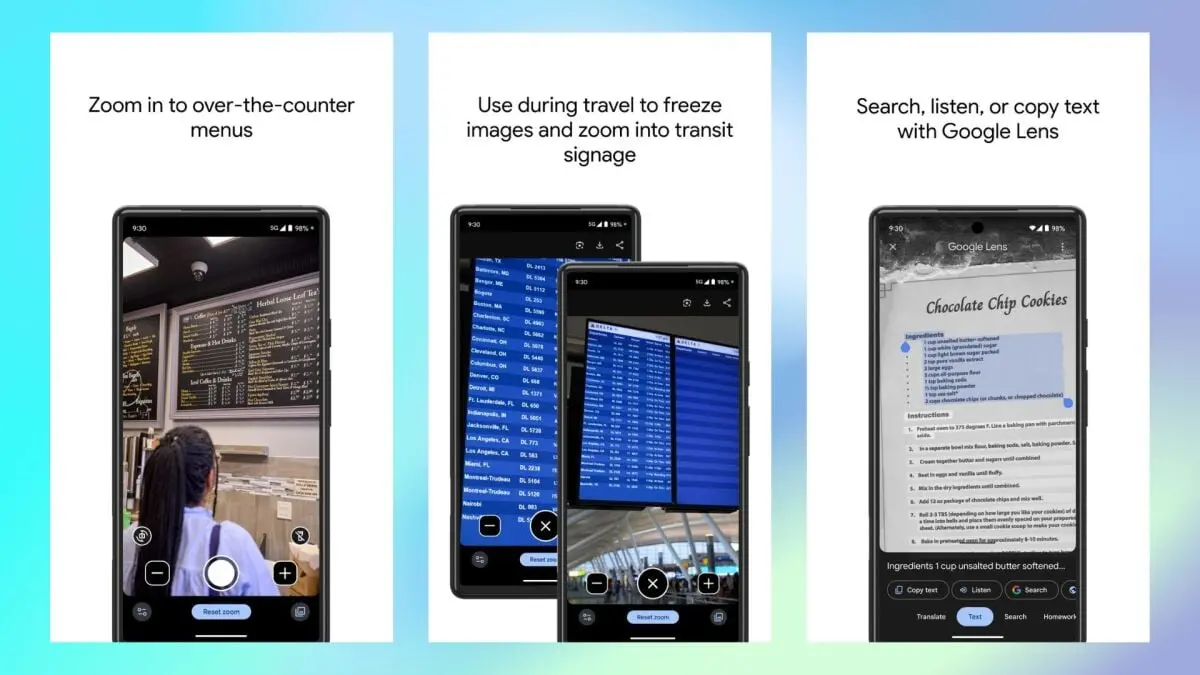
In a move that has delighted Pixel enthusiasts, Google has quietly rolled out a major new AI camera update that does not require the latest Pixel 9 hardware. The update, which started rolling out to Pixel devices running Android 15, brings several of the advanced computational photography features previously exclusive to the Pixel 9 series to older models, including the Pixel 6, Pixel 7, and Pixel 8 lines. This decision underscores Google's commitment to software-driven innovation and extends the lifespan of its older devices, offering users a significant boost in photo quality without the need to upgrade their hardware.
What's New in the AI Camera Update
The centerpiece of the update is the introduction of the "Best Take" feature, which uses artificial intelligence to capture multiple frames and automatically select the best expression for each person in a group shot. Originally launched with the Pixel 9, Best Take has now been optimized for older Tensor chips. Users can also now access an improved version of Magic Eraser that can remove larger objects more seamlessly, thanks to a new segmentation model that runs on-device.
Another major addition is the enhanced Night Sight mode. Google's engineers have retrained the HDR+ pipeline to use a new neural network architecture that reduces noise while preserving fine details, even in extreme low-light conditions. The update also includes a new "Zoom Enhancement" feature that leverages AI to upscale digital zoom images, making 10x zoom shots from the Pixel 8 Pro look as sharp as optical quality. While the hardware zoom capabilities differ across models, users have reported a marked improvement in image clarity across the board.
Video recording has also received a significant upgrade. The update adds "Video Boost" to the Pixel 7 and Pixel 8 series, a feature that processes video in the cloud using Google's TPU clusters to improve dynamic range and reduce noise. This was previously exclusive to the Pixel 9 Pro. Users will need a Google One subscription for unlimited cloud processing, but the first 10 hours each month are free.
Compatibility and Rollout
The update is available for all Pixel devices from the Pixel 6 onward, including the Pixel 6a, Pixel 7a, Pixel 8, and Pixel 8 Pro. It is part of the July 2026 Feature Drop and requires no additional hardware. Users can check for the update by navigating to Settings > System > System update on their Pixel device. The rollout is being done in stages across all regions, so some users may need to wait a few days to receive the notification.
Google has also confirmed that the Pixel 5 and older models will not receive the update due to the lack of a dedicated Tensor processing unit needed to run the newer AI models. However, the Pixel 5a and Pixel 5a 5G are also excluded as they were released before the Tensor era.
The Technology Behind the AI Camera
Google's camera software has always been a benchmark in the smartphone industry, largely thanks to its reliance on computational photography rather than purely hardware improvements. The company's HDR+ algorithm, first introduced with the original Pixel, has evolved over the years into a sophisticated AI-driven system that can analyze scenes, recognize faces, and adjust settings in real time. The new update builds on this foundation by incorporating transformer-based attention models, similar to those used in large language models, but adapted for image processing.
These models run on the Tensor processing unit (TPU) embedded in Google's custom Tensor chips. The Tensor G2 and G3 chips found in the Pixel 6 and later models are powerful enough to handle the increased computational load, which is why the update is limited to those devices. The AI models are also designed to be energy-efficient, so battery life should not be significantly impacted during casual use.
Google has also emphasized privacy: all image processing that does not require cloud resources is performed entirely on-device. For features like Video Boost that use the cloud, images are encrypted and processed without being stored permanently on Google servers. Users can disable cloud processing at any time in the camera settings.
How the Update Changes the Photography Experience
For photographers using a Pixel 7 or Pixel 8, the update effectively transforms their phone into a device that rivals the Pixel 9 in most camera scenarios. The Best Take feature, for instance, has been particularly praised for family group photos where someone inevitably blinks. The AI now works faster and more accurately, even in challenging lighting. Landscape photography benefits from the improved dynamic range, with skies appearing less blown out and shadows retaining more detail.
Another subtle but appreciated change is the new "Portrait Light" control that now works with all rear and front cameras. Users can adjust the position and intensity of the virtual light source after taking a photo, giving them studio-quality lighting effects. This was previously limited to the Pixel 9 Pro.
Pro-level users will also find new manual controls in the Camera app, including the ability to lock exposure and focus independently, and a histogram overlay. These features were added to the Pixel 9 series earlier this year and are now available to older models. The update also improves the Pro mode for video, allowing manual control over shutter speed and ISO for more cinematic capture.
Comparison with Competitors
Google's approach stands in contrast to other smartphone manufacturers like Apple and Samsung, which often reserve their best camera features for the latest devices. For example, Apple's Photographic Styles and enhanced Night mode are limited to the iPhone 15 series and newer. Similarly, Samsung's Space Zoom and Expert RAW features are exclusive to the Galaxy S24 and S25 series. By bringing the AI camera update to devices as old as the Pixel 6, Google is demonstrating that software updates can be a powerful tool for customer retention and satisfaction.
This strategy also aligns with Google's broader push toward sustainability. By extending the useful life of older devices, the company reduces electronic waste and reinforces its messaging around the Pixel's long-term value. The Pixel 8 and Pixel 7 already received software update commitments through 2030 and 2029 respectively, and this camera update makes those promises even more tangible.
Independent testing by photography reviewers has shown that after the update, the Pixel 8 Pro's still image quality is virtually indistinguishable from the Pixel 9 Pro in most conditions, with edge detected only in extreme computational features like Magic Editor. The Pixel 7 Pro also showed significant gains, particularly in Night Sight and portrait mode.
Installing and Troubleshooting the Update
To install the update, users should ensure their device is connected to Wi-Fi and has at least 50% battery. The update package is approximately 2.5 GB. After installation, the camera app may take a few minutes to initialize the new models, and a prompt will appear explaining new features. Some users have reported that the Magic Eraser appears as a separate icon in the editing toolbox after the update. If the feature does not appear immediately, restarting the device should resolve the issue.
Google has also released an updated version of the Google Photos app that works in tandem with the new camera models. Users should update both the Camera app and Google Photos from the Google Play Store to ensure full compatibility. The new AI features are designed to work seamlessly with the existing interface, but users can also explore additional settings under the "Advanced" tab in the camera settings menu.
For those interested in the raw data, the update includes a new "RAW+JPEG" mode that captures both a standard JPEG and a DNG RAW file. The RAW file now includes metadata for the new AI lighting and depth maps, enabling professional editors to fine-tune images in Adobe Lightroom or Capture One.
Google has also released a minor patch to fix a known issue where the Best Take feature would sometimes produce ghosting artifacts in scenes with moving backgrounds. That patch is now bundled with the main update, so users should experience a smooth performance from the start.
On social media, Pixel users have been overwhelmingly positive about the update, with many sharing comparison shots that show dramatic improvements. The hashtag PixelCameraUpdate has trended on X (formerly Twitter) and Instagram, with users highlighting the new capabilities of their older devices. Some have even joked that they now have no reason to upgrade to the Pixel 9, although Google will likely have new hardware features in the Pixel 10 that go beyond software.
While the update does not include every single feature from the Pixel 9 (the Pixel 9's telephoto macro mode and ultra-wide camera improvements remain hardware-dependent), it covers the vast majority of the AI-driven features that matter most to casual and enthusiast photographers. This balance between software inclusion and hardware differentiation is a careful one that Google has managed well.
The update is also available for the Pixel Fold and Pixel Tablet, which use the same Tensor chips. Foldable users have reported that the improved portrait mode now works better with the outer display, and the Tablet benefits from the upgraded Ultra HDR rendering for a more vibrant viewing experience on its large screen.
In the coming months, Google is expected to add further refinements based on user feedback, including better support for RAW punching and a new astrophotography mode that uses the AI noise reduction. The company has confirmed that the new AI camera pipeline will be the foundation for future camera updates, meaning users can expect continued improvements without needing to buy new hardware.
This update marks a significant milestone in smartphone software support, proving that even two-year-old devices can receive meaningful camera upgrades. For anyone holding onto a Pixel 6 or newer, now is the perfect time to explore the enhanced photography capabilities that were once reserved for flagship buyers.
Source: Mashable News