

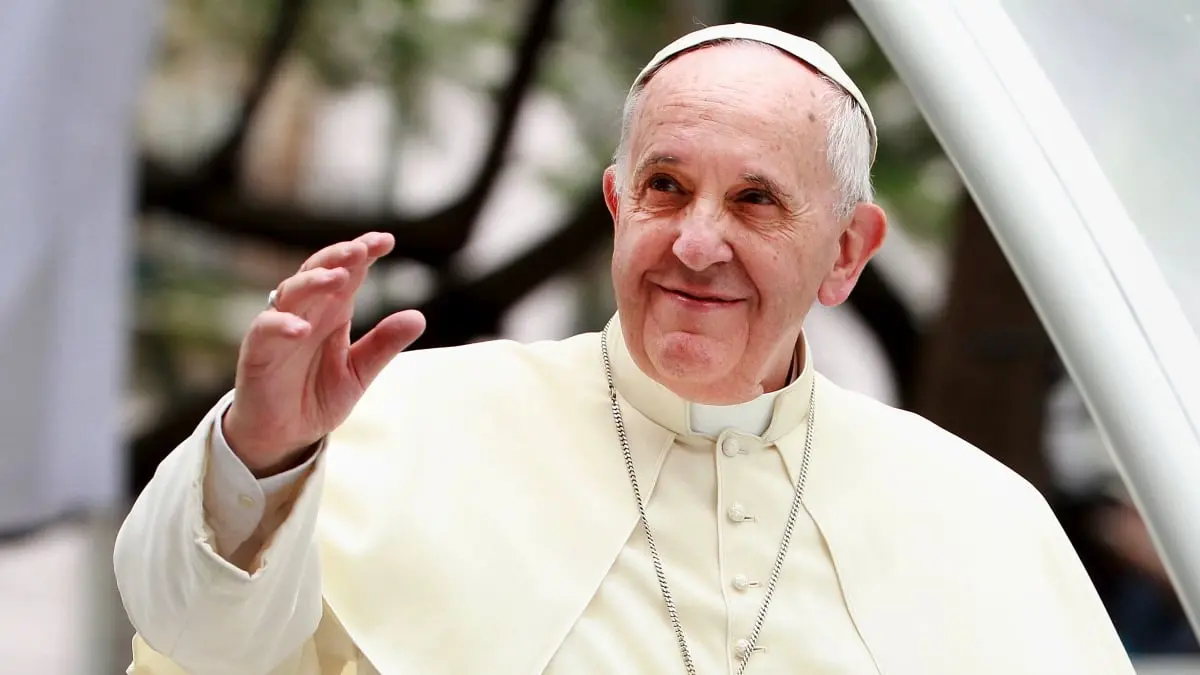
Pope Francis, the head of the Catholic Church, passed away on Easter Monday at the age of 88. Known as the first Latin American pontiff, he was celebrated for his progressive ideals within a traditionally conservative institution and his unwavering advocacy for social and economic justice. In the final weeks of his life, he shared a prescient and forward-thinking message about the rapidly advancing role of new technology in modern society.
“How I would like for us to look less at screens and look each other in the eyes more!” Pope Francis said in an official video message translated from his native Spanish. “Something's wrong if we spend more time on our cell phones than with people.” This heartfelt plea came as part of his “Monthly Intentions” for 2025—a series of prayer invitations that he released each month, calling on people around the globe to join him in focused prayer on a specific topic.
April’s intention, the final monthly intention before his passing, was dedicated entirely to new technology. The intention and related reflections posted to the Pope's Worldwide Prayer Network specifically mentioned artificial intelligence (AI), video calls, smartphones, and screen time in general. Pope Francis emphasized that while technology is a gift, its misuse can lead to isolation and division.
“It's true, technology is the fruit of the intelligence God gave us, but we need to use it well,” Pope Francis said in his April video address. “It can't benefit only a few while excluding others.” He called on individuals and societies to harness technology to unite rather than divide, and to prioritize helping the poor, the sick, and persons with disabilities. Consistent with his environmentally conscious messaging throughout his papacy, he also urged the use of technology to “care for our common home” and to foster genuine human connection.
Ironically, the very point the Pope made about technology was underscored by many social media users immediately after his death—albeit unintentionally. As news of his death spread, social networking platforms flooded with memes, many referencing the 2024 film Conclave about the secretive meeting of cardinals following a pope's death. Others joked about how Vice President JD Vance was among the last people to see the Pope before his death, having met him on Easter Sunday.
Pope Francis’s warning could not have come at a more critical time. The rapid integration of artificial intelligence into everyday life—from chatbots and virtual assistants to recommendation algorithms and predictive policing—has sparked global debates about ethics, privacy, and social cohesion. Studies show that excessive screen time is linked to increased rates of anxiety, depression, and loneliness, particularly among younger generations. The Pope’s message resonated not only with Catholics but with a wider audience concerned about the erosion of face-to-face interaction.
During his papacy, Pope Francis consistently addressed the dangers of technology when used without wisdom or compassion. In his 2015 encyclical Laudato Si', he wrote about the “technocratic paradigm” that dominates modern life, warning that it can lead to a loss of genuine relationships and a sense of stewardship for the environment. His April 2025 prayer intention was a natural extension of that earlier teaching, specifically targeting the tools that have become ubiquitous in the 2020s.
“The screen makes us forget that there are real people behind it who breathe, laugh, and cry,” Pope Francis said. He reminded listeners that technology should never replace “person-to-person” contact, that the virtual should never fully substitute the real, and that social networks should never replace social settings where communities gather in shared physical space.
In many ways, Pope Francis’s final public message was a call to rediscover the essential human need for authentic connection. Throughout his tenure, he emphasized the importance of dialogue, encounter, and solidarity—values that are often diminished when digital interactions replace physical presence. He frequently urged young people to step away from their phones and engage with the world around them, and he himself set an example by meeting with countless individuals from all walks of life during his travels.
The Pope’s warning also highlighted a growing concern about the digital divide. While technology has the power to connect people across vast distances, it can also exclude those without access to reliable internet or up-to-date devices. In low-income communities, lack of digital literacy and infrastructure can widen inequalities, making it harder for the poor, the sick, and persons with disabilities to benefit from technological advancements. Pope Francis called for a “human ecology” of technology—a approach that prioritizes the well-being of every person rather than profit or efficiency.
As the world reflects on Pope Francis’s legacy, his final words on technology stand out as a testament to his forward-thinking nature. He was not opposed to progress, but he wanted progress to serve humanity, not the other way around. His call to “use technology well” remains urgent as governments, companies, and individuals grapple with the consequences of rapid digitization. The challenge he laid down was clear: ensure that innovation strengthens bonds, deepens empathy, and respects the dignity of every person.
Pope Francis concluded his April prayer intention with a simple yet profound invocation: “Let us pray that the use of the new technologies will not replace human relationships, will respect the dignity of the person and will help us face the crises of our times.” These words, spoken only weeks before his death, now echo as a lasting legacy—a reminder that in an age of constant connection, the most important connection remains the one between human hearts.
Source: Mashable News