

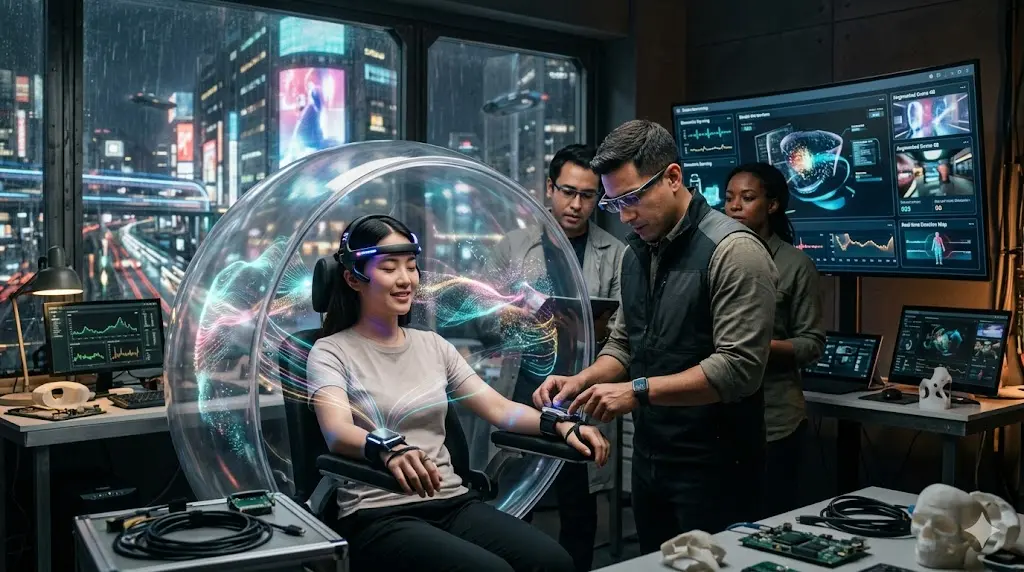
Wearable technology in entertainment is quietly reshaping how you watch, feel, and interact with digital content. It’s no longer just about screens—it’s about experiences wrapped around your body, reacting to your movement, mood, and environment. If you’ve ever wondered where entertainment is heading next, this shift is already happening around you.
Here’s the thing: we’re moving from passive viewing to fully responsive storytelling. And honestly, most people still underestimate how fast this change is accelerating.
Wearable technology in entertainment is transforming global media into interactive, body-responsive experiences using smart glasses, haptics, and biosensors. It allows users to feel content instead of just watching it. By 2026, entertainment will likely become immersive, adaptive, and deeply personalized across gaming, music, sports, and live events.
What Is Wearable Technology in Entertainment?
Wearable Technology in Entertainment: Smart devices worn on the body that deliver or enhance media experiences through real-time interaction, sensory feedback, and environmental awareness.
At its core, wearable tech in entertainment includes smart glasses, VR headsets, motion sensors, haptic suits, and even biometric bands. These devices don’t just display content—they respond to you.
Think about watching a sports match where your wristband vibrates when your team scores. Or playing a game where your heartbeat influences the storyline. That’s not sci-fi anymore.
In my experience, the biggest misunderstanding is that people assume wearables are just “accessories” to phones. They’re not. They’re slowly becoming the main interface for digital entertainment.
What most people overlook is how emotional this shift is. Entertainment stops being something you observe and becomes something you physically participate in.
Why Wearable Technology in Entertainment Matters in 2026
We’re in a weird transition phase right now. Screens still dominate, but they’re losing their exclusivity.
By 2026, wearable-driven entertainment is expected to merge gaming, streaming, and live interaction into a single experience layer. Instead of switching between devices, you’ll stay inside one continuous ecosystem.
Let me be direct: attention spans aren’t shrinking because people are distracted. They’re shrinking because static entertainment feels outdated.
Wearable tech fixes that by adapting content in real time. If you’re bored, it shifts pace. If you’re excited, it intensifies. That’s a huge shift in control—from platform to user body signals.
One counterintuitive point here: the more “advanced” entertainment becomes, the less visible the technology will feel. The best systems will disappear into the background.
Expert tip: If you’re working in media or content strategy, stop thinking about screens. Start thinking about sensory layers—sound, motion, temperature, and biometric feedback.
How to Experience Wearable Entertainment Systems Step by Step
Let’s break down how a typical immersive wearable entertainment setup actually works.
Step 1: Connect Your Wearable Ecosystem
You start by pairing devices—glasses, wristbands, or haptic wearables—with a central entertainment hub. This hub syncs content across all sensory channels.
Step 2: Calibrate Body Feedback
The system learns your baseline—heart rate, movement patterns, even stress signals. It sounds invasive, but most systems anonymize this locally.
Step 3: Choose Your Experience Mode
You pick a category: gaming, film immersion, live sports, or interactive music. Each mode behaves differently based on responsiveness.
Step 4: Engage With Real-Time Interaction
This is where things get interesting. You’re no longer just watching. You might influence a storyline by moving, reacting, or even staying still at key moments.
Step 5: Adaptive Output Begins
The system adjusts visuals, audio intensity, and tactile feedback based on your reactions.
In my opinion, Step 4 is where most people either get hooked or overwhelmed. It’s not for everyone yet, and that’s okay.
Common Misconception: Wearables Are Only for Gamers
A lot of people assume wearable entertainment is only about gaming. That’s outdated thinking.
The bigger shift is happening in passive entertainment—films, concerts, and sports broadcasts. Imagine watching a live concert where your wearable subtly syncs vibration patterns with the bass.
Here’s what’s interesting: some users actually prefer toned-down sensory feedback. Too much stimulation can reduce enjoyment. So, personalization becomes essential, not optional.
Expert Tips: What Actually Works in Wearable Entertainment Adoption
Let me share something I’ve noticed after observing early adoption patterns.
First, people don’t adopt wearable entertainment because of technology—they adopt it because of emotion. If the experience feels meaningful, they tolerate technical flaws.
Second, simplicity beats complexity in early stages. Devices that try to do everything usually fail faster.
Third, comfort is everything. If a wearable feels slightly annoying after 30 minutes, users will abandon it no matter how advanced it is.
Expert tip: Designers often obsess over visuals, but tactile comfort is the real retention driver. That’s the quiet truth most product teams miss.
And one more thing—audio-driven wearables are growing faster than visual ones in some markets. It’s unexpected, but audio is less cognitively demanding and easier to integrate into daily life.
Real-World Examples of Wearable Entertainment Use
Let’s ground this in something realistic.
A global esports tournament recently experimented with audience wearables that let fans feel in-game tension through vibration patterns. Viewers reported higher emotional engagement compared to traditional streaming.
Another example: a music festival trialed smart wristbands that synced crowd movement with lighting effects in real time. The crowd essentially became part of the performance system.
I’ll be honest—some of these experiments feel chaotic. But that’s how early ecosystems always behave.
What matters is the direction, not perfection.
The Hidden Shift No One Talks About
Here’s a hot take: wearable entertainment is not really about entertainment.
It’s about behavioral data feedback loops.
Every interaction teaches the system something about you. Over time, entertainment becomes less about choosing content and more about content choosing you.
That sounds unsettling, but it also explains why personalization will reach extreme levels. You won’t search for content as much. It will anticipate your emotional state.
Most discussions miss this entirely because they focus on devices, not systems.
People Most Asked About Wearable Technology in Entertainment
How is wearable tech changing entertainment today?
Wearable devices are making entertainment more interactive by linking content to body signals like movement and heart rate. This turns passive viewing into active participation.
Is wearable entertainment only about virtual reality?
No, VR is only one part. Wearables also include haptic devices, smart glasses, and biosensors that enhance everyday media experiences beyond virtual environments.
Will wearable entertainment replace screens completely?
Probably not anytime soon. Screens will still exist, but wearables will take over high-engagement experiences like gaming and live events.
What industries benefit most from wearable entertainment?
Gaming, sports broadcasting, live music, and interactive storytelling are seeing the fastest adoption because they rely heavily on emotional engagement.
Are wearable entertainment devices safe to use long term?
Most current devices are designed with safety standards, but long-term effects are still being studied, especially regarding continuous biometric tracking.
What skills are needed to build wearable entertainment systems?
You need a mix of UX design, sensor engineering, and behavioral analytics. Creative storytelling also plays a huge role.
Why is wearable tech growing faster now?
Costs are dropping, sensors are improving, and users are more open to immersive experiences than ever before.
Promotional Insight Paragraph
If you’re looking to amplify visibility around wearable innovation or entertainment-focused tech storytelling, our network site provides access to high-impact guest posting services and press release distribution that strengthen brand visibility and SEO ranking across competitive digital spaces. You can explore professional exposure opportunities through press release distribution services and scalable digital marketing services designed to increase organic traffic, media coverage, and authority backlinks. This approach helps startups, agencies, and brands gain instant publishing reach while building long-term search performance across global audiences.